
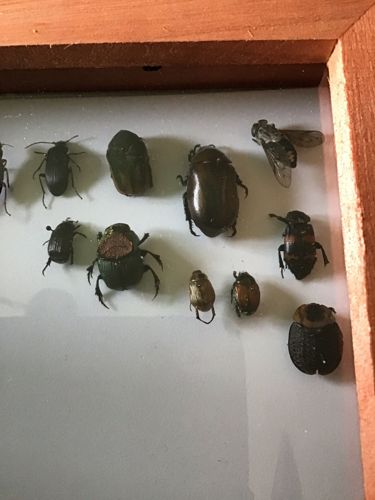
Dung Beetle
Various species, depending on the exact morphology (e.g., Scarabaeus sacer, Geotrupes stercorarius, Phanaeus vindex for some examples). The image displays several different species of dung beetles and what appears to be another type of beetle and possibly a fly.
- Order & Family
- Order: Coleoptera, Family: Scarabaeidae (specifically subfamily Scarabaeinae for true dung beetles, but other scarab subfamilies also have dung-feeding species).
- Size
- Typically from 5 mm to 60 mm (approximately 0.2 to 2.4 inches), though some species can be larger.
Natural Habitat
Dung beetles can be found in a wide variety of habitats where dung is available, including grasslands, forests, deserts, and farmlands across most continents.
Diet & Feeding
Primarily dung (feces) of herbivores and omnivores. They are detritivores, playing a crucial role in nutrient cycling.
Behavior Patterns
Dung beetles are known for their distinctive behavior of rolling dung into spherical balls, which they then bury either for food or to lay eggs in. Some species are 'dwellers' and live within the dung pat, while others are 'tunnellers' and bury dung where they find it. They are typically active during warmer months, with some species being nocturnal and others diurnal. The adult beetles are strong fliers and can cover significant distances in search of dung.
Risks & Benefits
Benefits: Dung beetles provide significant ecological benefits. They improve soil aeration and water penetration by burying dung, reduce pasture fouling, control fly populations (by removing their breeding grounds), and recycle nutrients back into the soil, crucial for plant growth. Risks: Generally, dung beetles pose no direct risks to humans or livestock. Some species might be considered agricultural pests if they consume roots in their larval stage, but this is less common for true dung beetles.