
Community identification
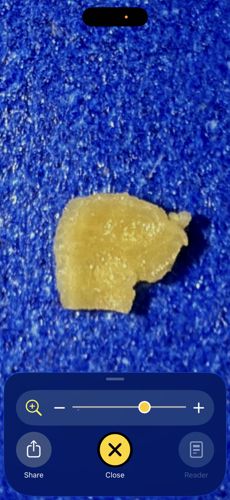
Tussock Moth Egg Mass Fragment
Lymantriinae (family)
- Order & Family
- Lepidoptera: Erebidae
- Size
- Entire egg masses are typically 10-30mm, though individual fragments may be much smaller (3-8mm).
Natural Habitat
Found on the underside of leaves, tree bark, or vertical surfaces like walls and fences in wooded or residential areas.
Diet & Feeding
Larvae (caterpillars) that emerge are generalist herbivores, eating leaves from a wide variety of deciduous and evergreen trees.
Behavior Patterns
Eggs are laid in late summer or fall in protective clusters covered in a frothy, hardened secretion or hairs from the female's body to overwinter.
Risks & Benefits
While harmless as eggs, the caterpillars that hatch can be invasive pests that defoliate trees. They often possess 'urticating hairs' that cause skin irritation and allergic reactions in humans.