
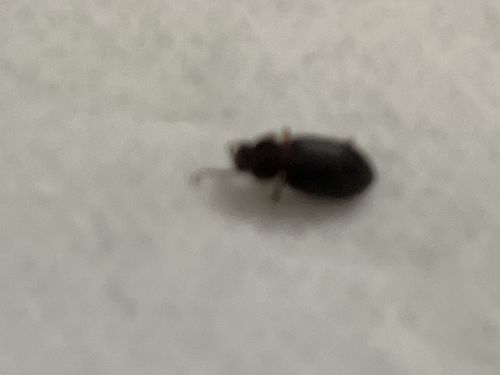
Cabinet Beetle or Larder Beetle (likely a species of Dermestid beetle)
Dermestes spp. or Trogoderma spp. (Specific identification requires clearer images or microscopic examination)
- Order & Family
- Order: Coleoptera, Family: Dermestidae
- Size
- Typically 2-12 mm, depending on the specific species.
Natural Habitat
Indoors, they are commonly found in pantries, kitchens, basements, attics, and areas where dried food products, animal products, or natural fibers are stored. Outdoors, they can be found in nests of birds or mammals, or where animal carcasses are present.
Diet & Feeding
Dermestid beetles are scavengers. Their diet includes a wide range of animal and plant products such as dried meats, stored grains, pet food, wool, leather, fur, feathers, museum specimens, dead insects, and even spices.
Behavior Patterns
Dermestid beetles are primarily scavengers. Adults are often found near food sources or breeding sites. Larvae are the damaging stage, actively feeding on organic materials. They can be quite secretive, often hiding in dark, undisturbed areas. Some species are attracted to light.
Risks & Benefits
Risks: As pests, they can cause significant damage to stored food products, textiles, museum collections, and other organic materials. They can also be a nuisance in homes and can sometimes cause allergic reactions in sensitive individuals due to hairs from their larvae. Benefits: In nature, they play a beneficial role as decomposers, breaking down dead animal and plant matter. Some species are also used in forensic entomology to determine post-mortem interval.