
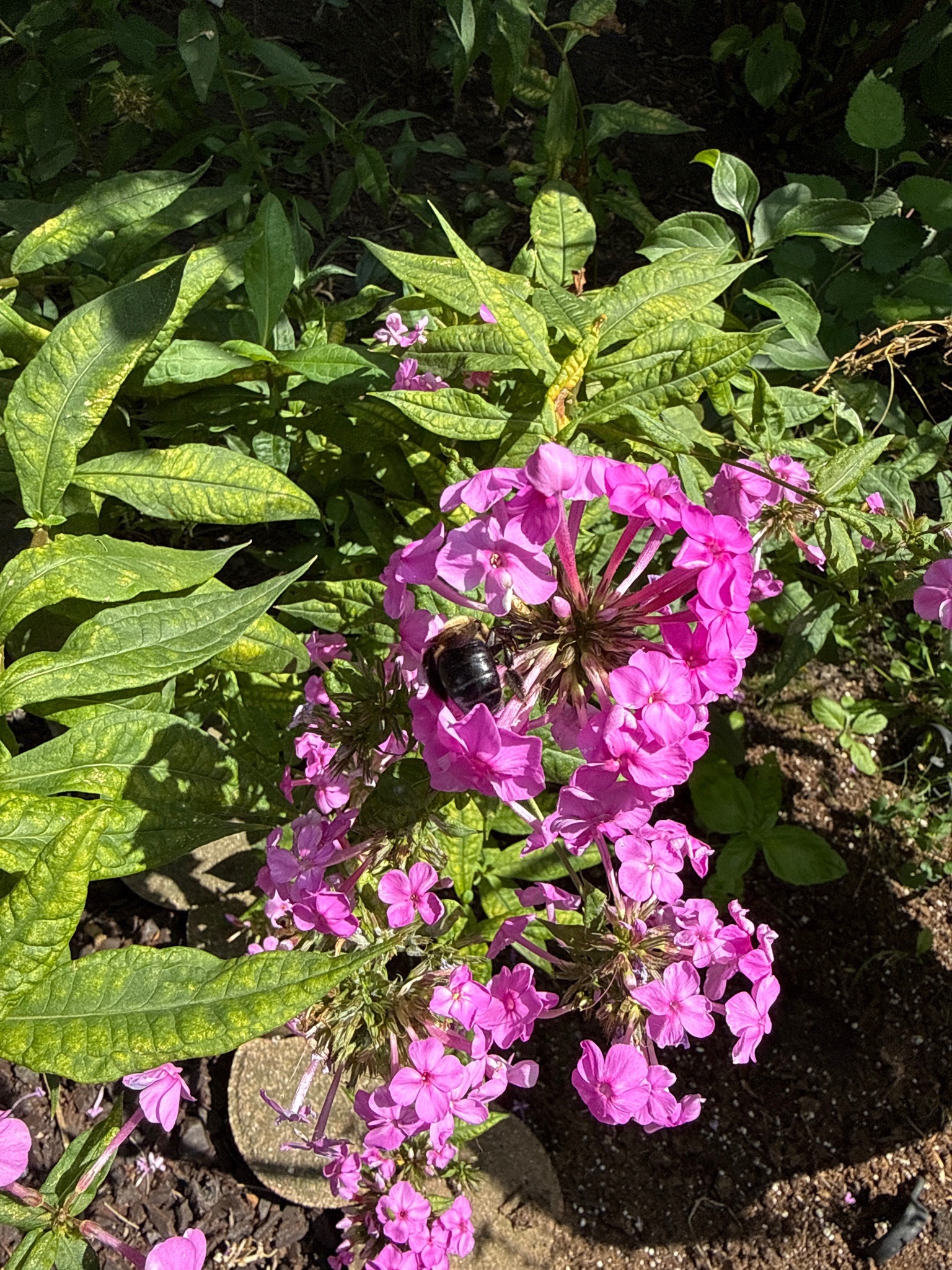
Community identification
Bumblebee
Bombus species (likely a native bumblebee)
- Order & Family
- Hymenoptera; Apidae
- Size
- Typically 8–25 mm long, depending on species and caste; queens are largest.
Natural Habitat
Flower-rich gardens, meadows, woodland edges, and other temperate habitats. This individual is foraging on phlox-like flowers.
Diet & Feeding
Adults consume nectar and collect pollen, which they feed to larvae. They are important pollinators of many wildflowers and crops.
Behavior Patterns
Bumblebees are social and live in seasonal colonies founded by a queen; workers forage during daylight, often in cool or cloudy weather. They can buzz-pollinate flowers by vibrating their flight muscles.
Risks & Benefits
They rarely sting unless threatened, though stings can cause severe allergic reactions. Their major benefit is highly effective pollination, supporting plant reproduction and food production.