
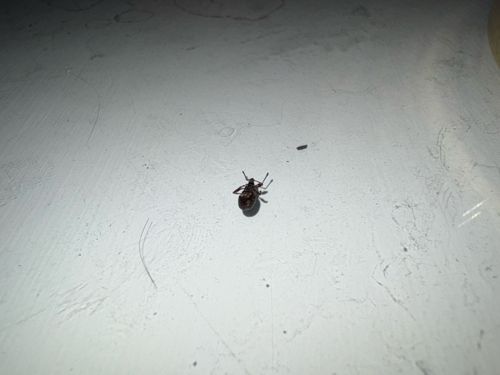
Spider Beetle
Various species, often Ptinus tectus (Australian spider beetle) or Gibbium psylloides (smooth spider beetle) based on appearance, but difficult to pinpoint exact species from image.
- Order & Family
- Order: Coleoptera, Family: Ptinidae (sometimes still listed under Anobiidae as subfamily Ptininae)
- Size
- Typically 1.5 - 4 mm long
Natural Habitat
Commonly found in human dwellings, warehouses, pantries, museums, and other places where stored dry goods are present. They prefer dark, damp, and undisturbed environments, often found in wall voids, attics, and basements.
Diet & Feeding
Polyphagous, feeding on a wide variety of dry organic materials including stored food products (grains, flour, spices, pet food), wool, feathers, leather, dried fruits, and even museum specimens.
Behavior Patterns
Spider beetles are typically nocturnal and prefer dark, undisturbed areas. They are known for their ability to survive long periods without food. Their larvae are C-shaped and often found in the same food materials as the adults. They play dead or curl up when disturbed.
Risks & Benefits
Risks: Considered a stored product pest, causing contamination and damage to food items. While they don't transmit diseases, their presence can render food unpalatable and necessitate disposal. Benefits: Generally no direct benefits to humans, but as scavengers, they contribute to the decomposition of organic matter in natural settings.