
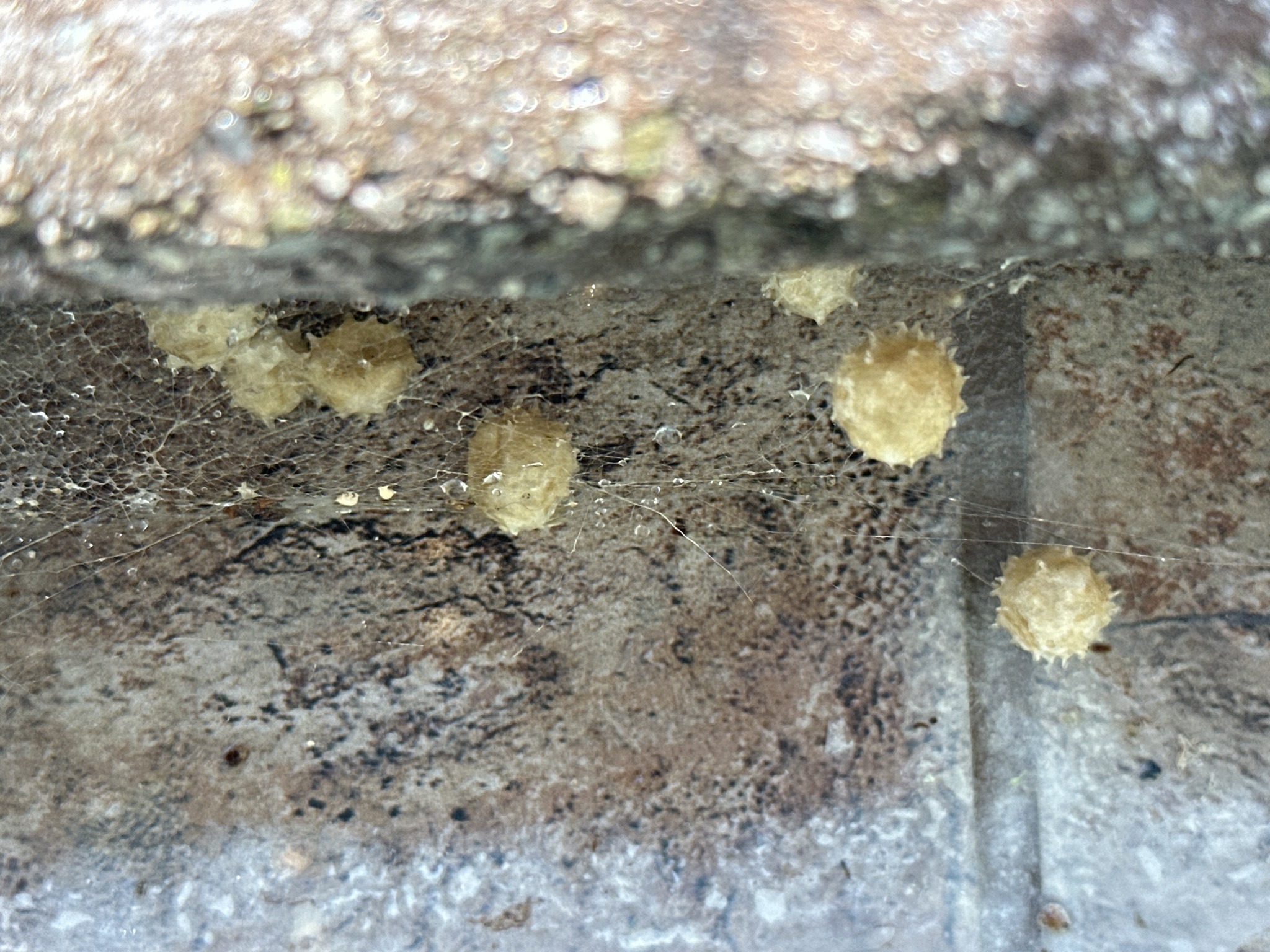
Case-bearing clothes moth larvae (likely)
Tinea pellionella
- Order & Family
- Lepidoptera; Tineidae
- Size
- Larvae reach about 6–10 mm long; their silk-and-fiber cases are typically 8–12 mm.
Natural Habitat
Dark, undisturbed indoor areas such as closets, carpets, upholstery, wall voids, and stored textiles. The pictured portable cases are characteristic of larvae attached to a surface.
Diet & Feeding
Larvae feed on keratin-containing materials, including wool, fur, feathers, hair, lint, and dead insects. Adults do not feed on fabrics and mainly reproduce.
Behavior Patterns
Larvae remain inside irregular, fiber-covered cases and crawl out to graze, retreating when disturbed; pupation occurs within or near the case. Adults are small, buff-colored moths that avoid light.
Risks & Benefits
They can damage woolens, furs, carpets, upholstery, and other animal-derived textiles, but do not bite or transmit disease. They contribute modestly to decomposition by consuming keratin-rich debris.