
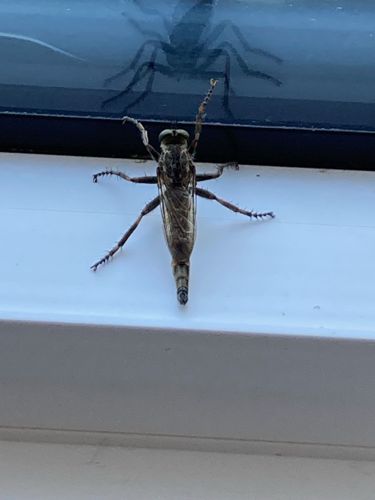
Robber Fly
Asilidae (family)
- Order & Family
- Order: Diptera, Family: Asilidae
- Size
- Typically range from 8 mm to 60 mm (approximately 0.3 to 2.4 inches) in length, depending on the species.
Natural Habitat
Found in diverse habitats ranging from forests, woodlands, and grasslands to deserts and urban gardens. They prefer open areas where they can spot prey, such as fields, meadows, and along the edges of paths and clearings.
Diet & Feeding
Strictly carnivorous; they prey on a wide variety of other insects, including bees, wasps, beetles, butterflies, grasshoppers, and even other flies. They inject their prey with neurotoxic and proteolytic enzymes to paralyze and digest the internal contents, then suck out the liquefied tissues.
Behavior Patterns
Robber flies are ambush predators, often perching in open, sunny locations waiting for prey to fly by. They are fast and agile in flight. Mating involves complex aerial dances, and eggs are typically laid in soil or on vegetation.
Risks & Benefits
Potential risks: They can deliver a painful bite if handled, though they are not aggressive towards humans. The bite is equivalent to a bee sting. Benefits: They are beneficial insects in most ecosystems, helping to control populations of other insects, including some agricultural pests. They do not transmit diseases.