
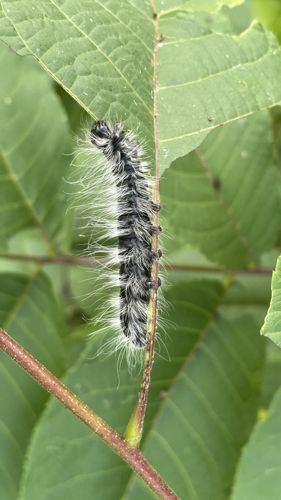
Fall Webworm
Hyphantria cunea
- Order & Family
- Lepidoptera (moths and butterflies), Erebidae
- Size
- Caterpillars typically range from 2.5 to 3.5 cm (1 to 1.4 inches) in length when fully grown.
Natural Habitat
Forests, orchards, urban and suburban areas, preferring deciduous trees and shrubs. They construct characteristic silken webs over branches and foliage.
Diet & Feeding
Polyphagous herbivores, meaning they feed on a wide variety of deciduous trees, including pecan, walnut, hickory, fruit trees, and many others. They primarily consume leaves.
Behavior Patterns
These caterpillars are often found gregariously in nests they weave from silk, especially when young. As they mature, they may disperse but often remain in groups. They are defoliators, actively feeding on leaves of their host plants. After feeding, they pupate, and adult moths emerge.
Risks & Benefits
Potential risks include defoliation of trees, which can stress or weaken them, especially during repeated infestations. In ornamental or orchard settings, this can be an aesthetic nuisance or impact crop yield. For humans, the hairs of some caterpillars (though not typically Fall Webworms) can cause skin irritation or allergic reactions if touched, known as lepidopterism. Generally, Fall Webworms are considered a pest rather than beneficial, due to their defoliating activity.