
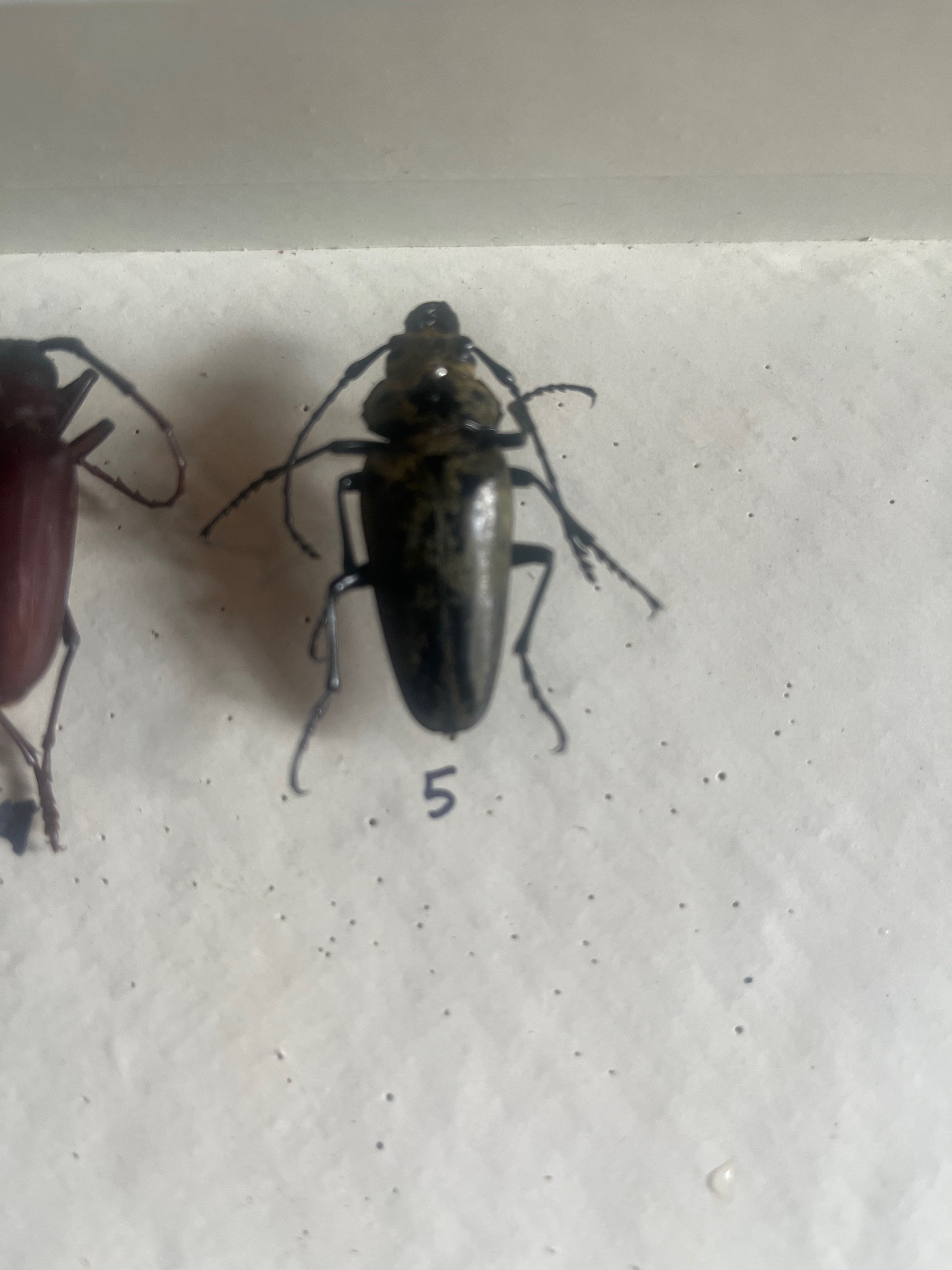
Community identification
Longhorn beetle (likely a flat-faced longhorn)
Unknown from the photograph; likely subfamily Cerambycinae
- Order & Family
- Coleoptera; family Cerambycidae
- Size
- Approximately 15–25 mm long, excluding antennae, based on the specimen’s scale.
Natural Habitat
Woodlands, forest edges, and areas containing dead or stressed hardwood; adults may visit lights or buildings.
Diet & Feeding
Larvae usually tunnel through and consume wood beneath bark; adults commonly feed on nectar, pollen, sap, or foliage, depending on species.
Behavior Patterns
Adults are generally nocturnal or crepuscular and may be attracted to lights. Larvae develop inside wood for months to years before pupating and emerging as adults.
Risks & Benefits
Most species are harmless to people and do not bite unless handled. Larvae help decompose wood, though some species can damage firewood, timber, or living trees; a species-level identification requires a clearer image and locality.