
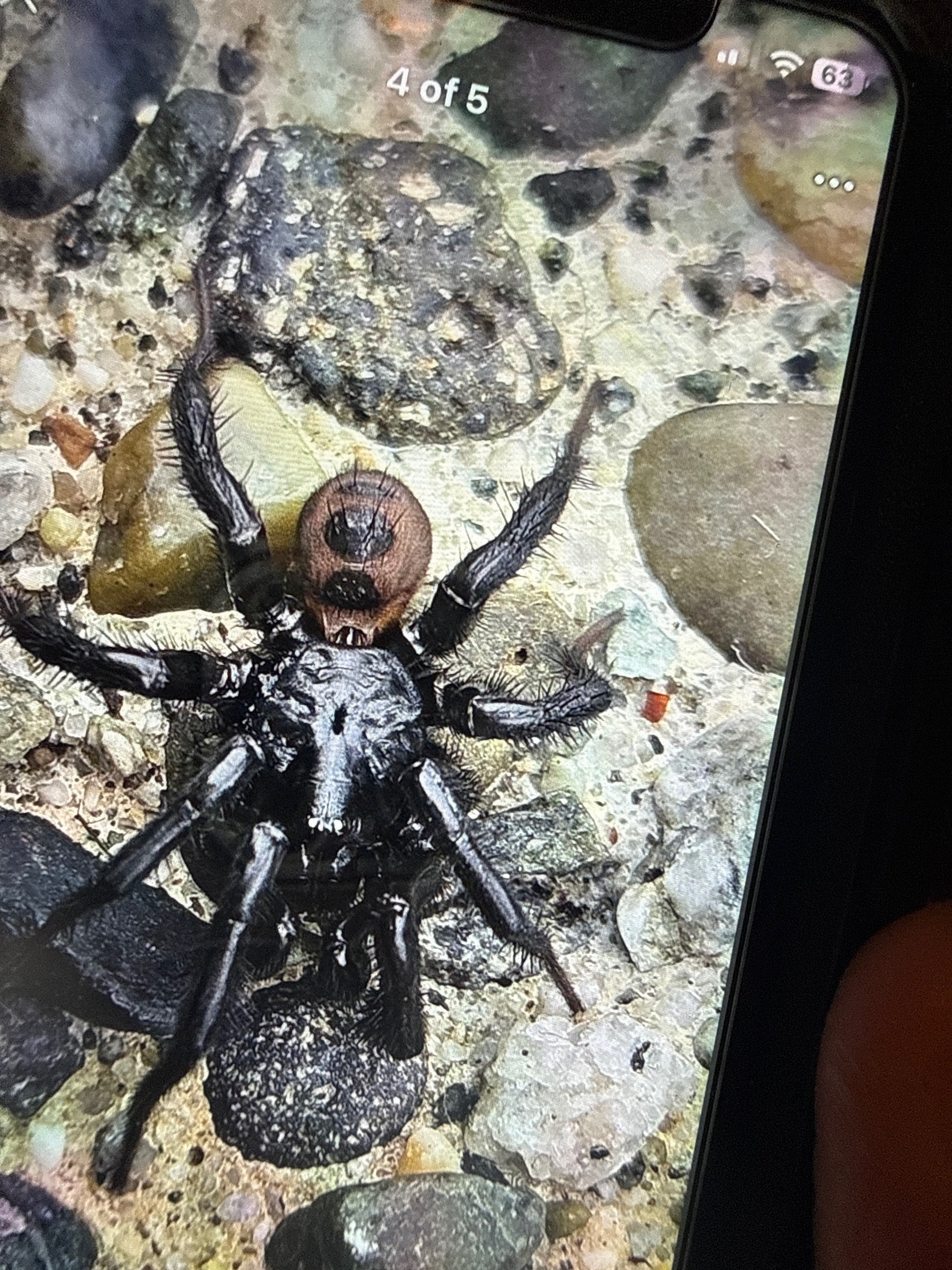
Tarantula
Likely an unidentified New World tarantula (family Theraphosidae); species cannot be confirmed from the image.
- Order & Family
- Araneae; Theraphosidae
- Size
- Adults commonly measure 2.5–10 cm (1–4 in) in body length, with a leg span of about 7–25 cm (3–10 in), depending on species.
Natural Habitat
Terrestrial habitats such as burrows, leaf litter, rocky areas, scrubland, and tropical or subtropical forests. Many shelter beneath stones or in silk-lined retreats.
Diet & Feeding
Predatory; eats insects, spiders, and other small invertebrates, occasionally small vertebrates. It subdues prey with venom and external digestion.
Behavior Patterns
Mostly solitary and nocturnal, relying on ambush rather than webs to capture prey. It may rear up, flick urticating hairs, or bite when seriously threatened; males wander while seeking mates.
Risks & Benefits
Usually medically mild to humans, but bites can be painful and defensive hairs may irritate skin, eyes, or airways. Tarantulas help regulate invertebrate populations and are generally nonaggressive.