
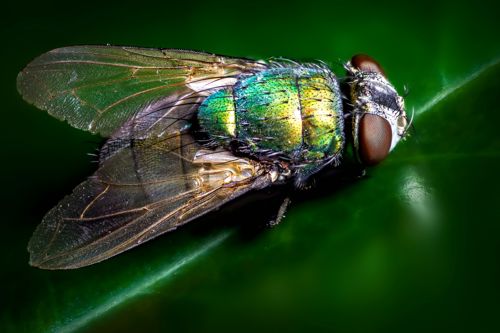
Community identification
Common Green Bottle Fly
Lucilia sericata
- Order & Family
- Order Diptera, Family Calliphoridae
- Size
- 10 to 14 millimeters in length
Natural Habitat
Found worldwide in most temperate and tropical regions, commonly near gardens, farms, and areas with decaying organic matter or waste.
Diet & Feeding
Adults feed on nectar and pollen; larvae (maggots) consume carrion, decaying meat, or necrotic tissue.
Behavior Patterns
They are diurnal and attracted to the smell of decomposition where females lay eggs. They have a rapid life cycle, often used in forensic entomology to determine time of death.
Risks & Benefits
Risks include the spread of pathogens like Salmonella. Benefits include ecological decomposition and use in 'maggot therapy' to clean non-healing wounds.