
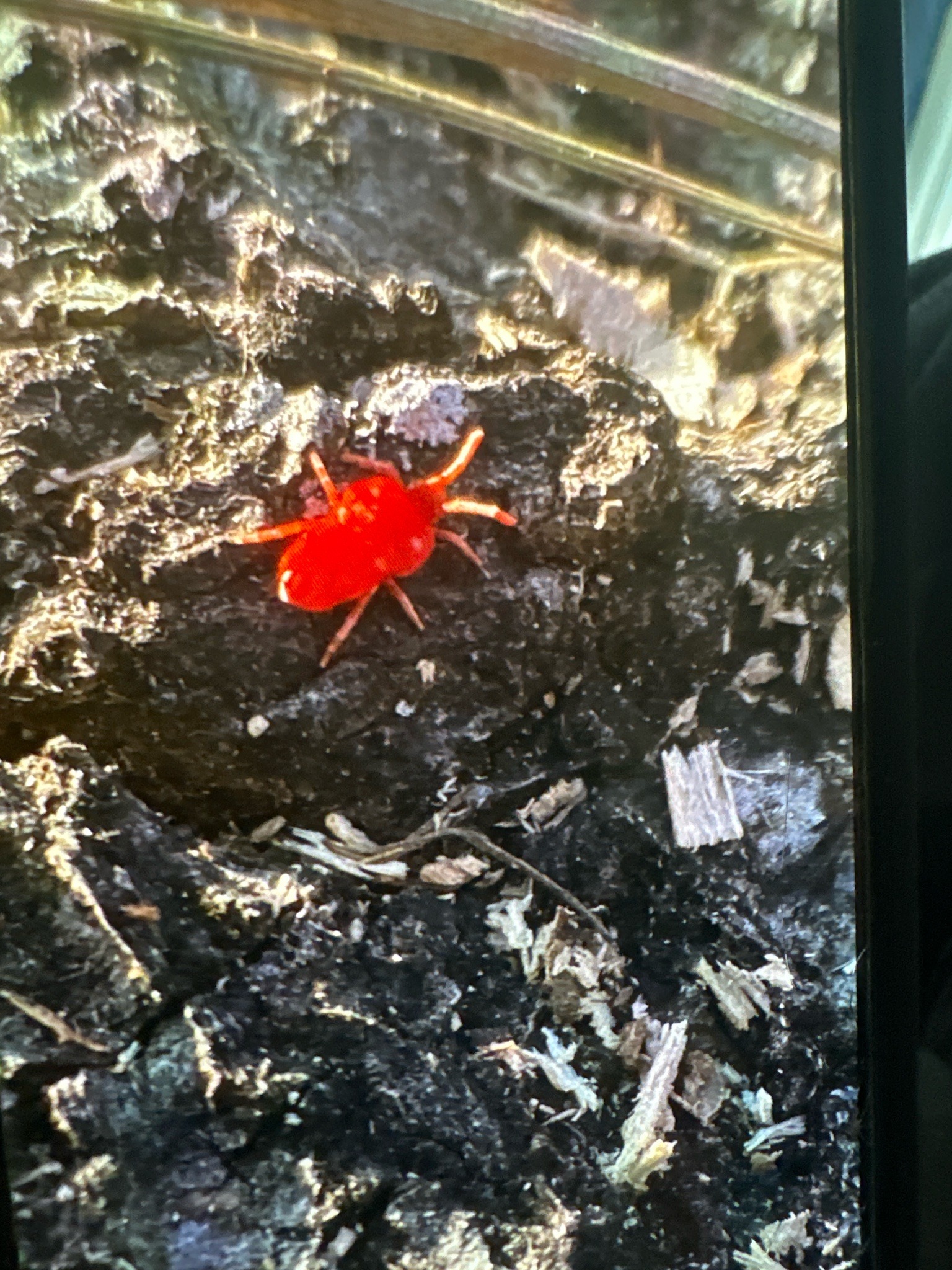
Community identification
Red Velvet Mite
Trombidium holosericeum
- Order & Family
- Order: Trombidiformes; Family: Trombidiidae
- Size
- 3 mm to 5 mm (roughly 1/8 to 1/4 inch)
Natural Habitat
Damp soil, leaf litter, woodland floors, and gardens; commonly emerges after rain.
Diet & Feeding
Adults are active predators that feed on small insects, insect eggs, and other small invertebrates. Larvae are parasites on various insects and arachnids.
Behavior Patterns
They are known for their bright red, velvety appearance due to fine hairs covering their bodies. They spend most of their time in the soil or leaf litter but become visible on the surface to forage or mate after rainfall.
Risks & Benefits
They are harmless to humans and pets, as they do not bite or sting. Beneficially, they are important predators in the soil ecosystem, helping to control populations of smaller pests and contributing to decomposition processes.