
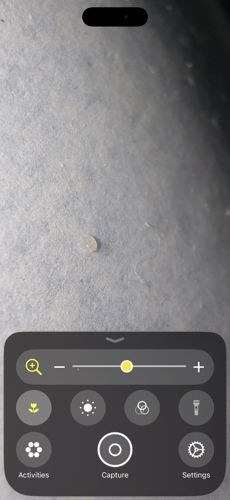
Community identification
Egg (likely of a common moth or indoor insect)
Invertebrata (order/family dependent on species)
- Order & Family
- Unknown (Insufficient detail for specific identification; potentially Lepidoptera or Hemiptera)
- Size
- 0.5 mm to 1.5 mm
Natural Habitat
Often found attached to surfaces like fabrics, paper, or indoor foliage where the adult lays them.
Diet & Feeding
Non-feeding stage; the developing embryo inside uses stored yolk for nutrition.
Behavior Patterns
Stationary and immobile; undergoes embryonic development leading to the larval (caterpillar or nymph) stage.
Risks & Benefits
Generally harmless as eggs, but depending on the species, the hatched larvae may become pests of clothing, stored food, or plants.