
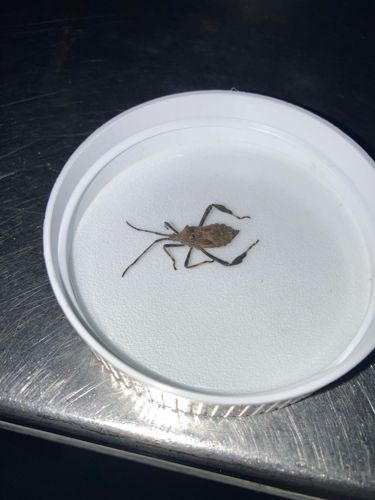
Assassin Bug (likely a type of assassin bug or predatory bug)
Reduviidae (family name, specific genus/species is difficult to determine from the image alone without more detail)
- Order & Family
- Order: Hemiptera; Family: Reduviidae
- Size
- Typically ranges from 5 mm to 40 mm (0.2 to 1.6 inches) in length, depending on the species.
Natural Habitat
Widely varied depending on the species. They can be found in gardens, fields, forests, trees, and other natural landscapes. Some species are also found in or around human dwellings.
Diet & Feeding
Predatory; feeds on other insects and arthropods. This includes a wide range of prey such as caterpillars, beetles, flies, and other invertebrates. They are generally beneficial as natural pest control.
Behavior Patterns
Assassin bugs are generally solitary predators. They use their rostrum (beak-like mouthpart) to inject a paralyzing and liquefying saliva into their prey, then suck out the bodily fluids. Some species mimic their prey or use camouflage. Many species are nocturnal, but some are active during the day. Certain species might bite defensively if handled or provoked, which can be painful.
Risks & Benefits
Benefits: They are highly beneficial in agriculture and gardens as natural predators that help control pest insect populations, reducing the need for chemical pesticides. Risks: While generally not aggressive towards humans, they can deliver a painful bite if mishandled or threatened. The bite is not venomous in the sense of being medically significant, but it can be quite painful, cause localized swelling, and discomfort, similar to a bee sting. They are not known to transmit diseases to humans.