
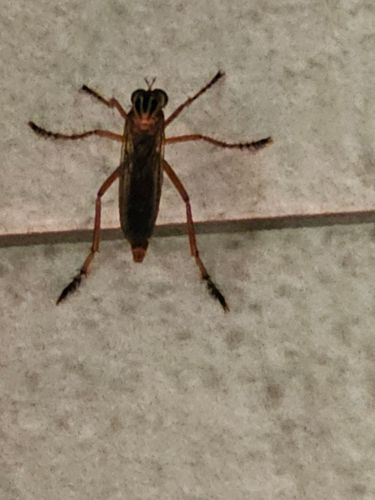
Robber Fly
Asilidae (Family)
- Order & Family
- Order: Diptera (True Flies), Family: Asilidae
- Size
- Varies significantly by species, generally from 3 mm to over 50 mm (0.1 to 2 inches) in length. The one in the image appears to be in the medium size range for a robber fly.
Natural Habitat
Robber flies can be found in a variety of habitats worldwide, including grasslands, forests, deserts, agricultural fields, and urban gardens. They prefer sunny, open areas where they can easily spot prey.
Diet & Feeding
Strictly predatory. Adult robber flies prey on a wide range of insects, including other flies, bees, wasps, butterflies, moths, grasshoppers, beetles, and even other robber flies. Larvae typically live in soil or decaying wood and prey on other insect larvae or small invertebrates.
Behavior Patterns
Robber flies are sit-and-wait predators. They often perch on open ground, leaves, or twigs, waiting for prey to fly by. Once prey is spotted, they swiftly fly out, capture it in mid-flight, and return to their perch to consume it. They inject digestive enzymes into their prey to liquefy its insides before sucking out the fluids. Mating typically occurs in the air or on a perch, and females lay eggs in soil, decaying wood, or on plants, depending on the species.
Risks & Benefits
Risks: Robber flies are generally not dangerous to humans. They do not sting, but they can deliver a painful bite if mishandled or provoked, though this is rare. Benefits: They are highly beneficial insects as natural predators, helping to control populations of various insect pests, including those that can be harmful to crops or transmit diseases. Their predatory nature makes them important components of many ecosystems.