
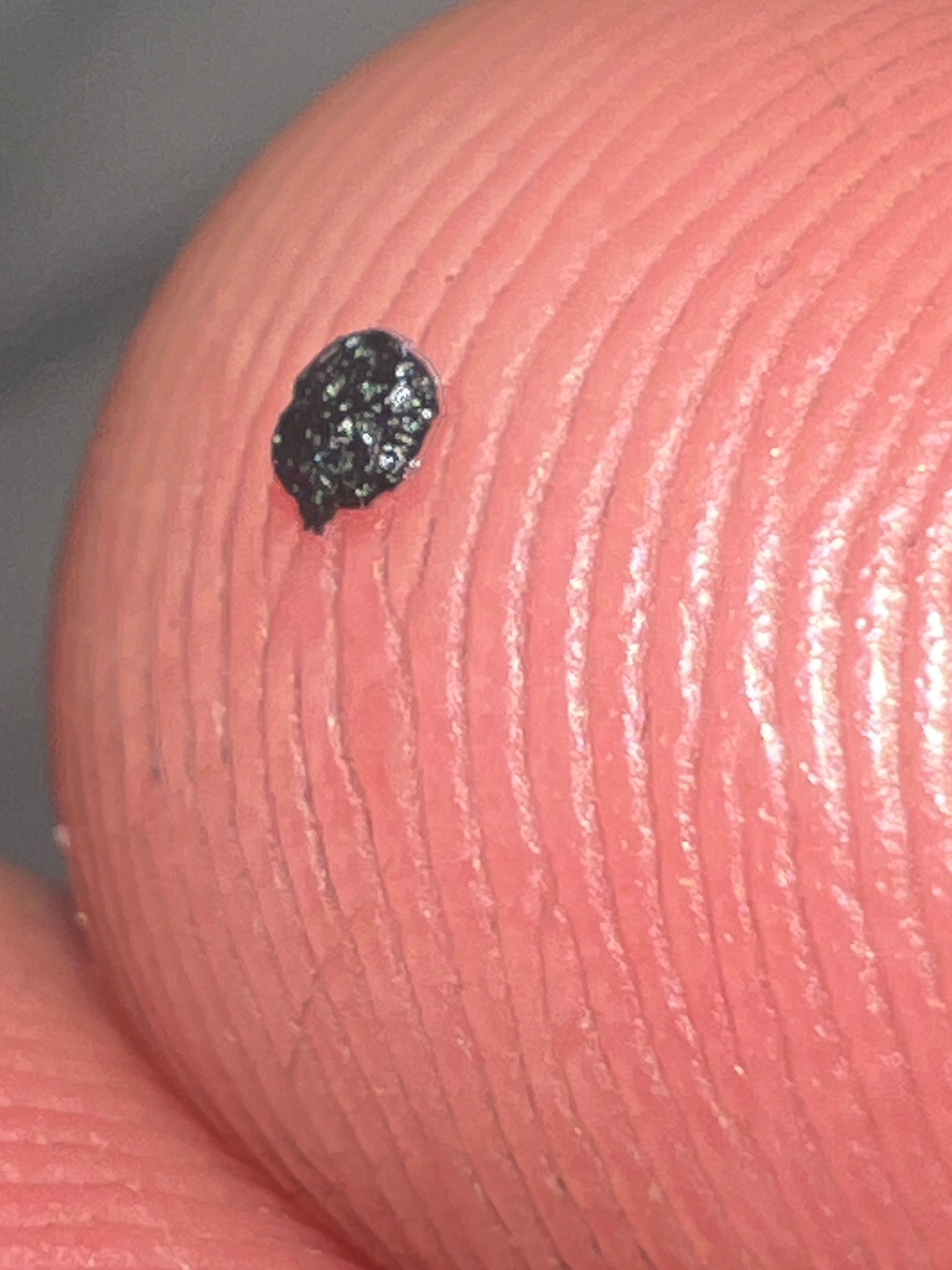
Community identification
Dog Tick (Larva)
Dermacentor variabilis (likely)
- Order & Family
- Ixodida: Ixodidae
- Size
- Larvae are roughly 0.5 mm to 1 mm, often compared to the size of a grain of sand or a poppy seed.
Natural Habitat
Grassy areas, wooded paths, and low vegetation where they wait for potential hosts.
Diet & Feeding
Strictly hematophagous; they require a blood meal from mammals, birds, or reptiles to progress to the next life stage.
Behavior Patterns
They exhibit 'questing' behavior, where they climb to the tips of grass or leaves and extend their legs to latch onto passing hosts.
Risks & Benefits
They are vectors for various diseases including Rocky Mountain spotted fever and Tularemia; they provide no known ecological benefits to humans.