
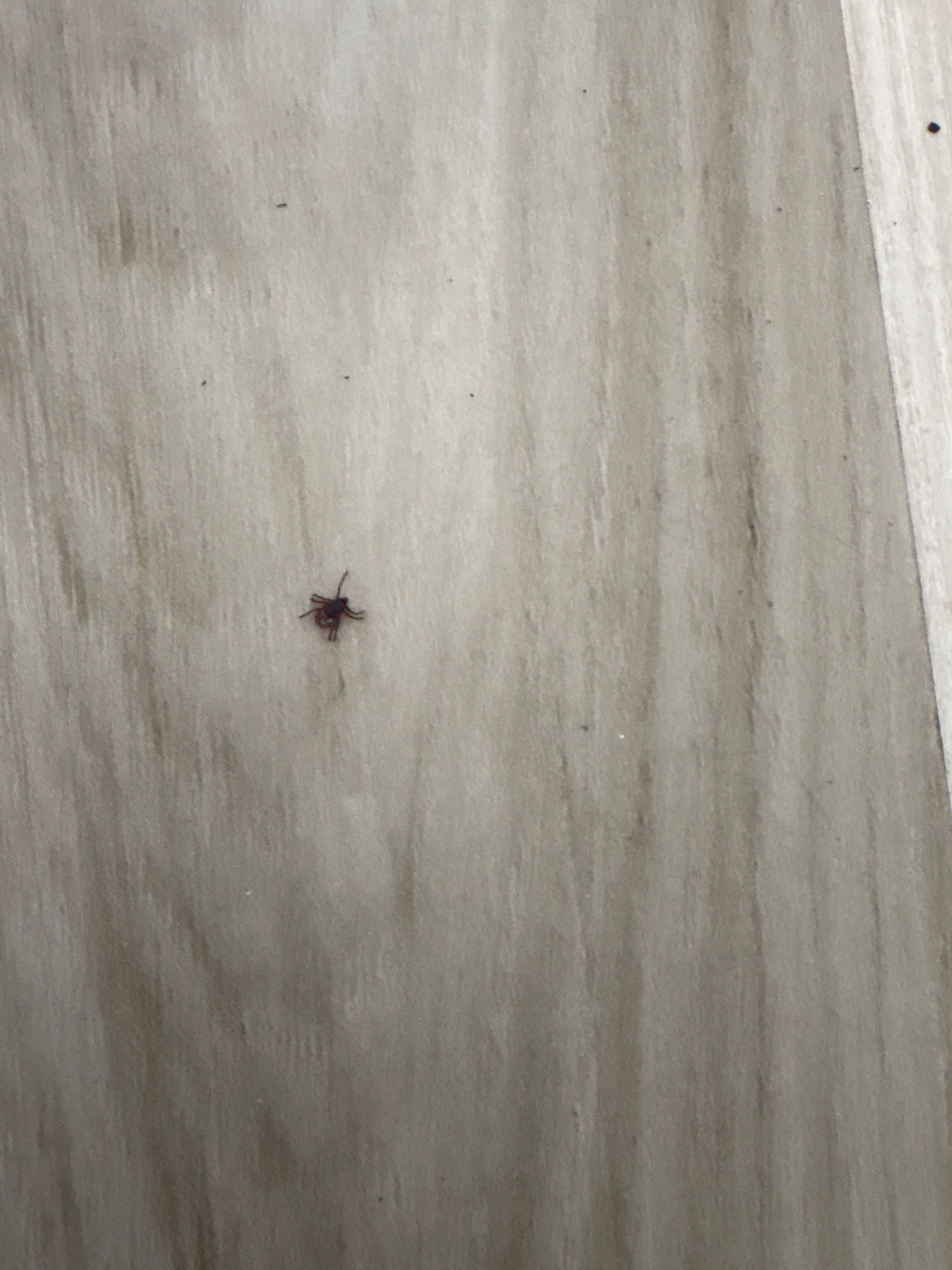
Community identification
Dog Tick
Dermacentor variabilis
- Order & Family
- Ixodida: Ixodidae
- Size
- 3mm to 5mm (unfed), can grow significantly larger (up to 15mm) when fully engorged.
Natural Habitat
Tall grass, brush, and wooded areas, often along trails or paths frequented by mammals.
Diet & Feeding
The blood of mammals, including humans, dogs, and wildlife.
Behavior Patterns
This tick is a 'questing' arachnid that waits on the tips of vegetation to latch onto a passing host. They have a four-stage life cycle: egg, larva, nymph, and adult.
Risks & Benefits
Risks: Can transmit serious diseases such as Rocky Mountain spotted fever (RMSF) and tularemia to humans and pets. Benefits: None to humans; they serve as a food source for some wildlife like opossums and certain birds.