
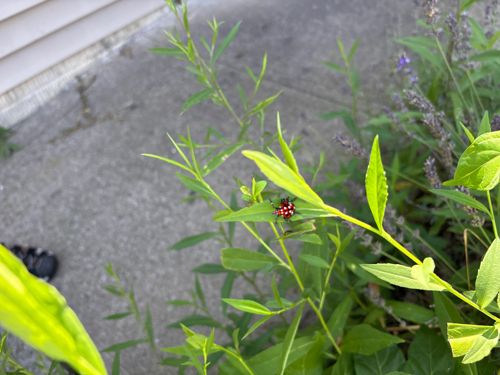
Large Milkweed Bug Nymph
Oncopeltus fasciatus (nymph stage)
- Order & Family
- Order: Hemiptera, Family: Lygaeidae
- Size
- Nymphs typically range from a few millimeters to about 1 cm as they progress through instars.
Natural Habitat
Commonly found in areas where milkweed plants grow, such as fields, meadows, roadsides, and gardens. They are almost exclusively associated with milkweed.
Diet & Feeding
Mainly feeds on the seeds and sap of milkweed plants (Asclepias species). They use their piercing-sucking mouthparts to extract fluids.
Behavior Patterns
The nymphs are often found on milkweed plants, where they feed on the sap. They are generally slow-moving. Their bright coloration serves as a warning to predators, indicating their toxicity.
Risks & Benefits
Risks: Generally no direct risk to humans. Their presence in monarch butterfly habitats might be perceived as competition for milkweed resources, but typically they don't significantly harm monarch populations. Benefits: They are part of the natural ecosystem, contributing to the decomposition process of milkweed seeds. They can also be a food source for some predatory insects and birds, although their toxicity can deter many predators.