
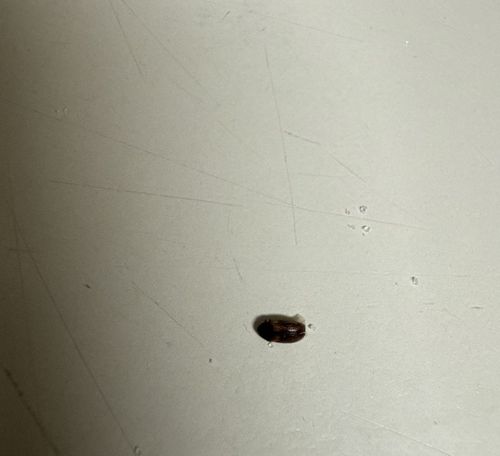
Cabinet Beetle
Trogoderma inclusum (also known as the Larger Cabinet Beetle) or a closely related species within the Dermestidae family.
- Order & Family
- Coleoptera (Beetles), Dermestidae (Skin Beetles or Larder Beetles)
- Size
- Adults typically range from 2.5 to 5.5 mm (0.10 to 0.22 inches) in length.
Natural Habitat
Typically found in areas where dried organic materials are stored, such as pantries, food storage areas, museums, and homes. They can infest food products, natural fibers, and animal-derived products.
Diet & Feeding
Adults feed on pollen and nectar. Larvae are scavengers and feed on a wide variety of organic matter, including dried protein products (e.g., dead insects, animal remains, museum specimens), dried fruits, grains, seeds, hair, wool, silk, feathers, and sometimes even spices and other pantry items.
Behavior Patterns
Attracted to light. Can fly but often found crawling. They play dead when disturbed by drawing in their legs and antennae and lying motionless. Adults are short-lived. Larvae are the damaging stage, feeding on various organic materials.
Risks & Benefits
Risks: Considered a pest due to its destructive feeding habits on stored food products, museum specimens, textiles, and other household items. Can cause significant damage to collections and food supplies. Does not generally bite or sting humans. Benefits: In nature, dermestid beetles play a role as decomposers, helping to break down animal carcasses and organic matter. They are also used in cleaning skeletons for scientific purposes.