
Community identification
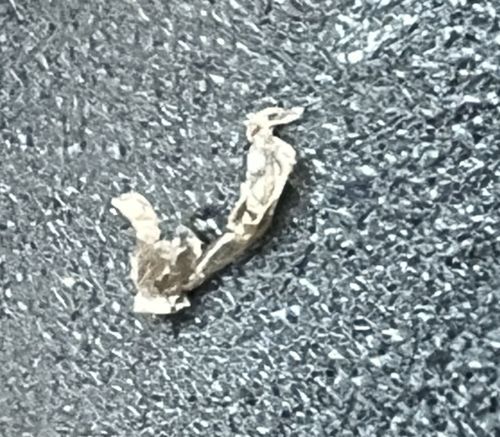
Household Casebearer moth larva (Plaster Bagworm)
Phereoeca utericella
- Order & Family
- Order: Lepidoptera, Family: Tineidae
- Size
- Larval case is usually 8mm to 13mm in length.
Natural Habitat
Typically found inside residential homes, garages, and sheds, often on walls or ceilings near baseboards.
Diet & Feeding
Larvae feed on spider webs, wool, hair, and organic detritus. They are known for consuming the silk of other insects.
Behavior Patterns
The larva constructs a spindle-shaped silk case covered in sand, dust, and lint. It can turn around inside the case to protrude its head from either end. They move slowly along surfaces until they are ready to pupate.
Risks & Benefits
They are considered a minor domestic pest as they can damage natural fiber fabrics like wool or silk. They are harmless to humans and pets, and they help clean up spider webs within the home ecosystem.