
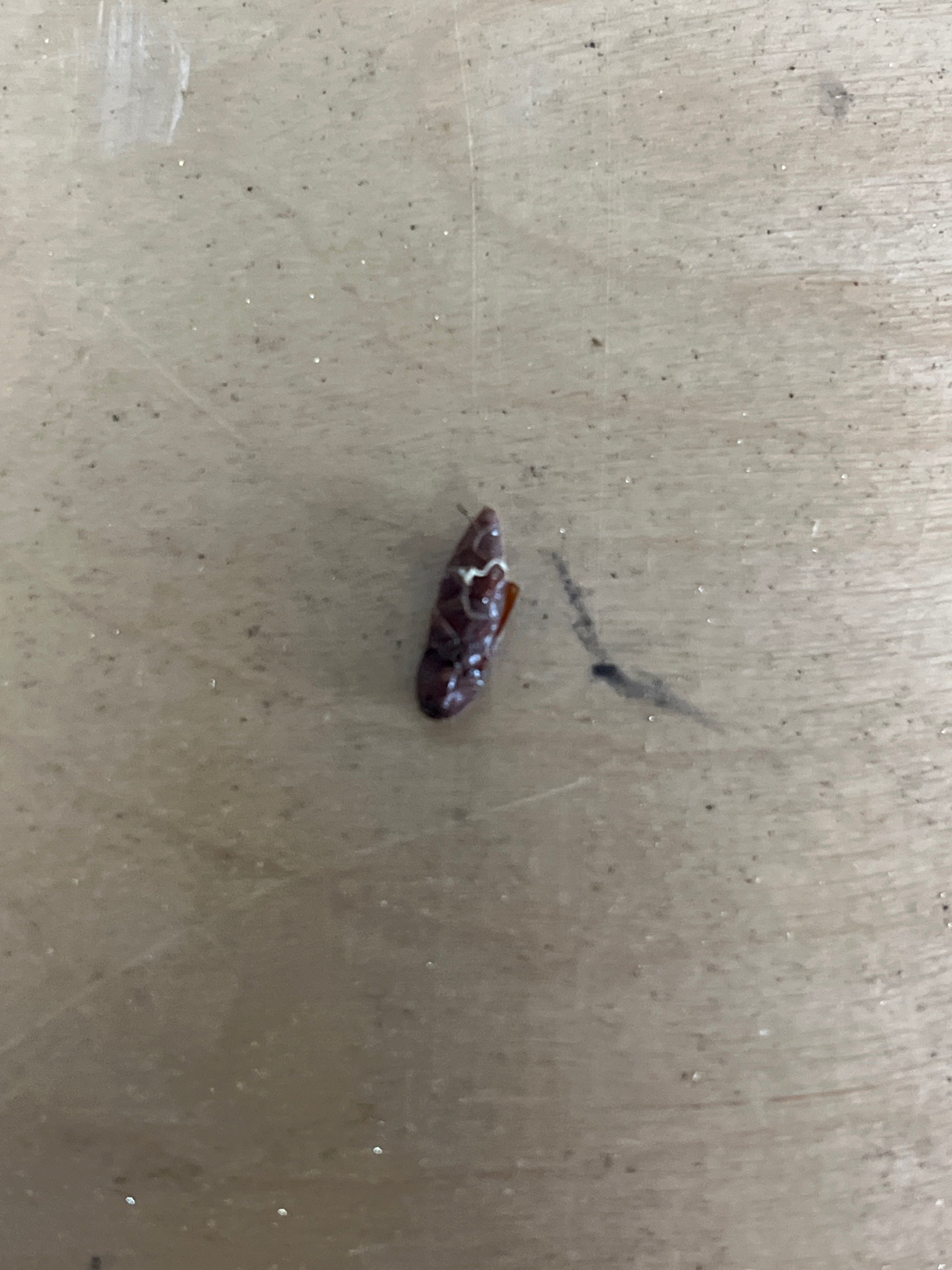
Fly Puparium
Family Muscidae, Calliphoridae, or Sarcophagidae
- Order & Family
- Order Diptera; various families
- Size
- 3 mm to 10 mm depending on the species
Natural Habitat
Typically found in areas with decaying organic matter, such as trash bins, compost piles, or near animal waste, but can also be found indoors under baseboards or in carpet.
Diet & Feeding
In the pupal stage, the insect does not eat. As larvae (maggots), they consume decaying organic matter, bacteria, and liquids.
Behavior Patterns
The puparium is the hardened skin of the final larval stage, inside which the maggot transforms into an adult fly. This stage is immobile and represents a transition period in the life cycle.
Risks & Benefits
While the pupae themselves are harmless, they indicate a nearby breeding site for flies. Adult flies can spread pathogens like Salmonella or E. coli. Benefits include the breakdown of organic waste in external ecosystems.