
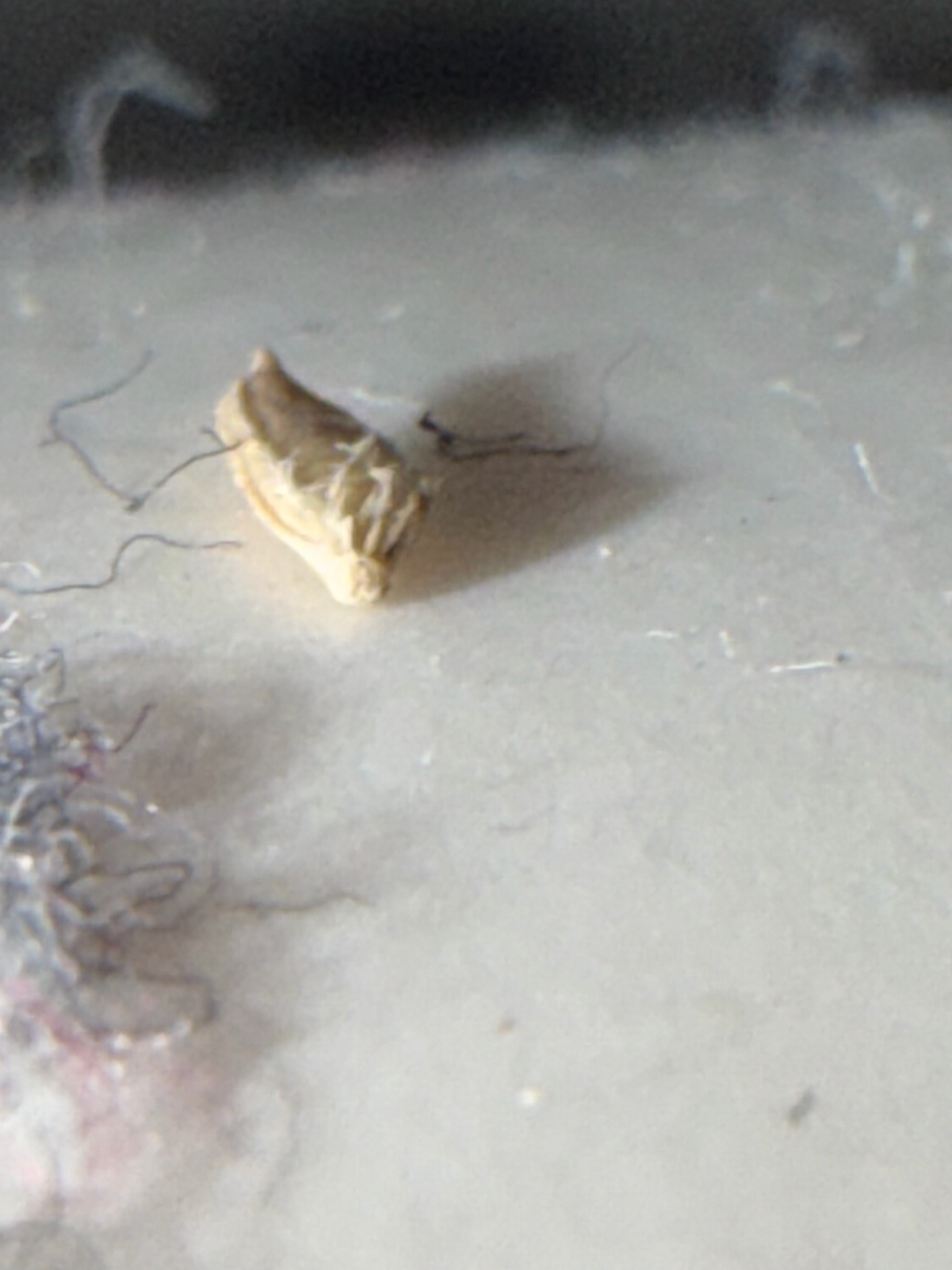
Community identification
Unidentifiable moth-like insect (possibly a pantry moth)
Likely *Plodia interpunctella*, but the image is insufficient for confirmation
- Order & Family
- Lepidoptera; family Pyralidae (tentative)
- Size
- Adults are typically 8–10 mm long, with a wingspan of about 14–20 mm.
Natural Habitat
Pantries, kitchens, food-storage areas, and occasionally bird or rodent nests. Adults may rest on walls, ceilings, or other surfaces near infested food.
Diet & Feeding
Larvae feed on stored grains, flour, cereals, nuts, dried fruit, pet food, and similar materials; adults generally do not feed.
Behavior Patterns
Adults are nocturnal and weak fliers; females lay eggs near stored food. Larvae produce silk webbing and may wander away from food to pupate.
Risks & Benefits
Not dangerous to people, but infestations contaminate stored food with larvae, droppings, webbing, and cast skins. They have little direct ecological benefit indoors, though moths serve as prey for predators.