
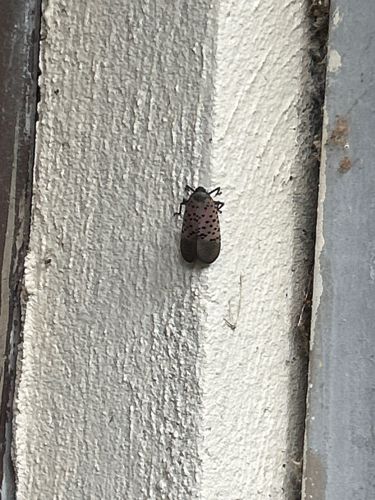
Spotted Lanternfly
Lycorma delicatula
- Order & Family
- Order: Hemiptera; Family: Fulgoridae
- Size
- Adults typically measure about 2.5 cm (1 inch) in length and 1.25 cm (0.5 inch) in width. Nymphs are smaller, varying in size through different instars.
Natural Habitat
Native to China, India, and Vietnam, the Spotted Lanternfly has become an invasive species in regions like the northeastern United States. They inhabit vineyards, orchards, forests, urban and suburban areas, and nurseries, often found on their host plants or surfaces near them.
Diet & Feeding
Spotted Lanternflies are sap-feeding insects that feed on a wide range of host plants, including agricultural crops (e.g., grapevines, fruit trees), ornamental trees, and many native tree species (e.g., Tree of Heaven). They pierce the bark to extract sap, weakening the plant.
Behavior Patterns
Spotted Lanternflies migrate and lay eggs on various surfaces, including trees, rocks, and outdoor equipment. They are known to congregate in large numbers, particularly in the later stages of their life cycle. Nymphs and adults are strong jumpers and adults are capable of short-distance flights. They excrete a sticky substance called honeydew, which can promote the growth of sooty mold.
Risks & Benefits
Potential Risks: Spotted Lanternflies pose a significant threat to agriculture and forestry due to their broad host range and voracious feeding habits. They can cause severe damage to fruit crops (especially grapes), hops, and various trees, leading to economic losses. Their honeydew excretion attracts other insects (like wasps and ants) and promotes the growth of black sooty mold, which can cover plants, outdoor furniture, and vehicles, reducing photosynthesis in plants and creating an unsightly mess. They are primarily a pest and offer no known significant benefits in invaded ecosystems. Potential Benefits: None, as they are an invasive species causing harm.