
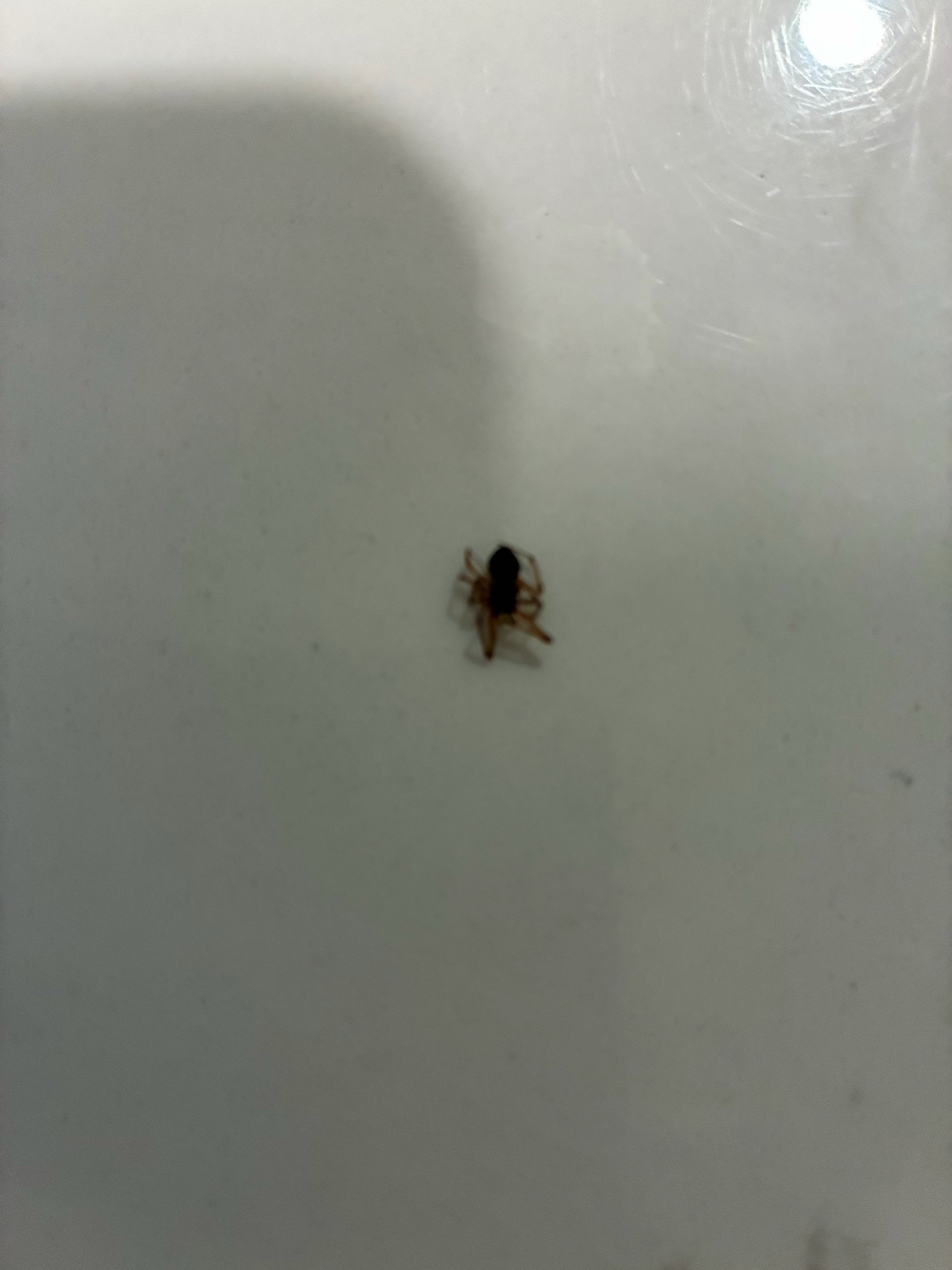
Community identification
Spider beetle (likely); identification uncertain from the blurred image
Ptinus sp. (probable)
- Order & Family
- Coleoptera, Ptinidae
- Size
- About 1.5–4 mm long, depending on species.
Natural Habitat
Indoors, especially pantries, cupboards, stored-food areas, and dark dry crevices; also occurs in bird or rodent nests.
Diet & Feeding
Larvae feed on dried organic materials, including grains, flour, spices, pet food, dead insects, and occasionally natural fibers. Adults mainly disperse and may feed little.
Behavior Patterns
Usually nocturnal and secretive; adults may curl their legs and feign death when disturbed. Larvae develop within stored products or accumulated debris, and infestations can persist unnoticed.
Risks & Benefits
Generally harmless to people and pets and does not bite or transmit disease. It can contaminate or damage stored food and textiles, while contributing modestly to decomposition outdoors.