
Community identification
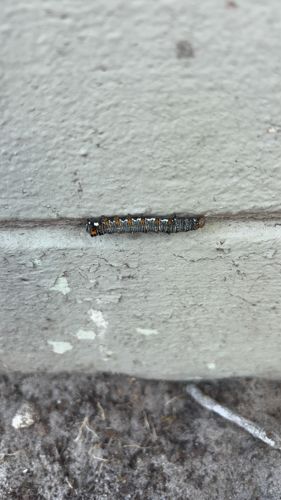
Forest Tent Caterpillar
Malacosoma disstria
- Order & Family
- Lepidoptera: Lasiocampidae
- Size
- 2 inches (50 mm) in length for mature larvae.
Natural Habitat
Deciduous forests, woodlands, and urban areas across North America.
Diet & Feeding
Leaves of broadleaf trees, especially aspen, gum, oak, maple, and birch.
Behavior Patterns
Unlike other tent caterpillars, they do not build silk tents; instead, they spin silken mats on trunks and branches where they congregate at rest. They are known for cyclical outbreaks every 6 to 16 years.
Risks & Benefits
Risks: Can cause significant defoliation of trees during outbreaks, which may stress or kill already weakened trees. Benefits: They are a food source for many birds and predatory insects, and their droppings return nutrients to the soil.