
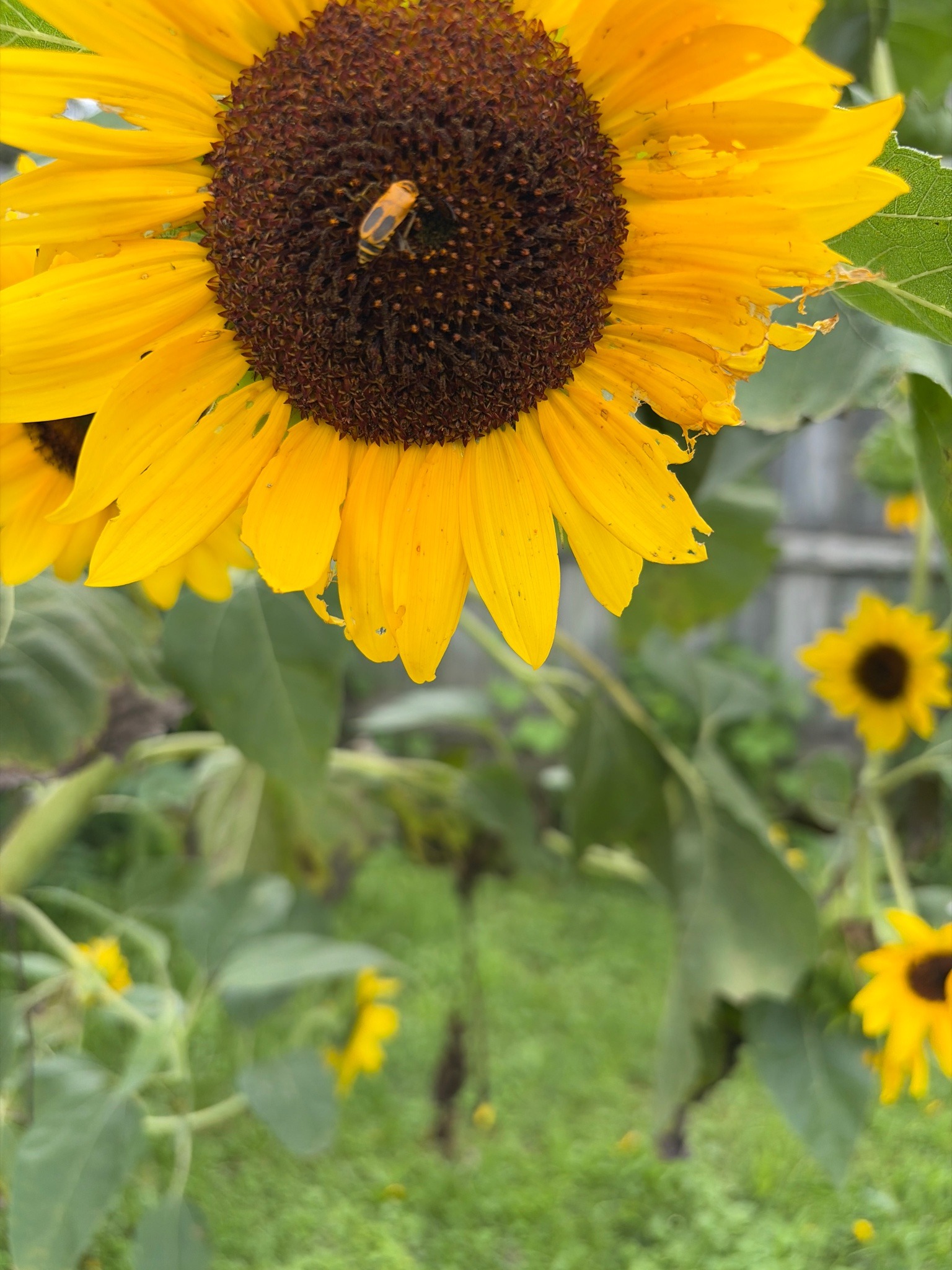
Community identification
Honey bee
Apis mellifera
- Order & Family
- Hymenoptera; Apidae
- Size
- Workers are typically 10–15 mm long; queens and drones are larger.
Natural Habitat
Flowering meadows, gardens, orchards, and other areas with abundant nectar and pollen; colonies nest in cavities or managed hives.
Diet & Feeding
Adults consume nectar and pollen, converting nectar into honey. Larvae are fed glandular secretions, pollen, and honey.
Behavior Patterns
Highly social, colony-living insects that communicate food locations through dances and scent. Workers forage, pollinate flowers, defend the hive, and live about 4–6 weeks during the active season.
Risks & Benefits
Important pollinators supporting wild plants and many crops; honey and beeswax are valuable products. Females can sting, posing a serious risk to people with bee-venom allergies.