
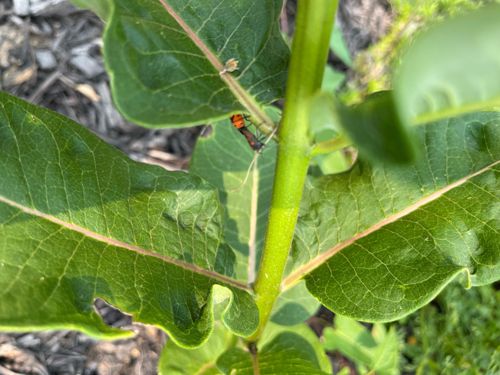
Small Milkweed Bug
Lygaeus kalmii
- Order & Family
- Hemiptera, Lygaeidae
- Size
- Adults typically range from 10 to 12 mm (0.4 to 0.5 inches) in length.
Natural Habitat
Found wherever milkweed plants grow, which includes meadows, fields, roadsides, gardens, and other disturbed areas across North America.
Diet & Feeding
Primarily feed on the seeds of milkweed plants (Asclepias species). They may also occasionally feed on other parts of the plant, such as stems and leaves, by sucking sap. While milkweed is their preferred host, they can sometimes be found on other plants.
Behavior Patterns
Adult milkweed bugs are often seen in aggregations on milkweed plants, especially around seed pods in late summer and fall. They are active during the day and feed by piercing the plant tissue with their proboscis to suck out juices from seeds, stems, and leaves. Nymphs (immature stages) also feed on milkweed plants and undergo several instars before reaching adulthood.
Risks & Benefits
Potential Risks: Generally considered harmless to humans and beneficial insects. While they feed on milkweed, the damage they cause to the plant is usually not significant enough to harm the milkweed population, especially if the goal is to provide food for monarch butterflies (which primarily consume leaves and do not compete for seeds with the bugs). Potential Benefits: They are part of the natural ecosystem, contributing to the biodiversity of environments where milkweed grows. They can also serve as a food source for a variety of predators.