
Community identification
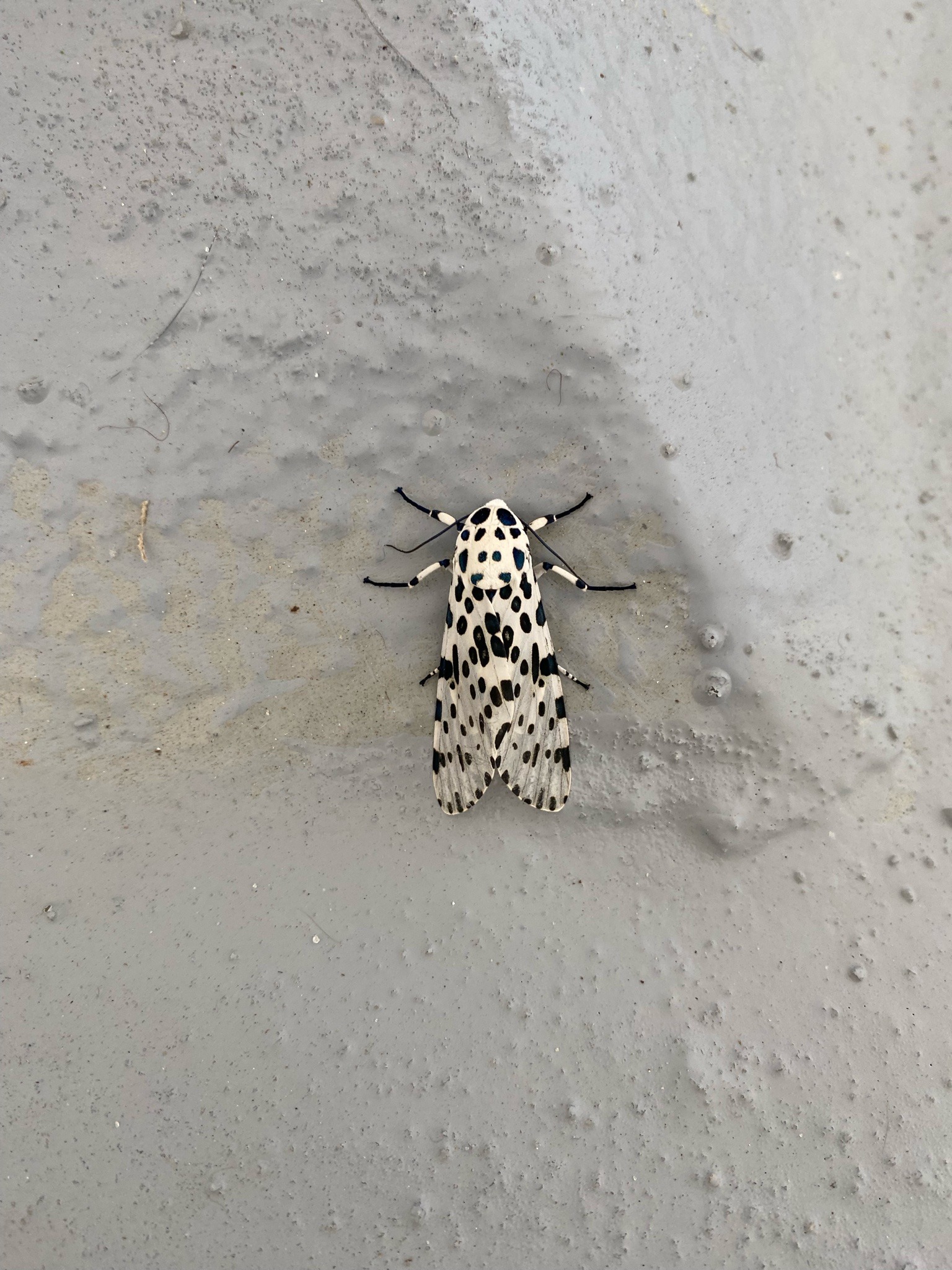
Great Leopard Moth
Hypercompe scribonia
- Order & Family
- Lepidoptera: Erebidae
- Size
- Wingspan of 2.25 to 3.6 inches (5.7 to 9.1 cm).
Natural Habitat
Woodlands, farmlands, and suburban gardens across North America.
Diet & Feeding
Adults do not eat; caterpillars (Giant Woolly Bears) eat a variety of broad-leaf plants including dandelion, violets, and honeysuckle.
Behavior Patterns
Night-active (nocturnal) and attracted to lights; caterpillars are known for curling into a tight ball when threatened to reveal iridescent blue-purple bands between body segments.
Risks & Benefits
Harmless to humans; serves as a pollinator and a food source for birds and bats; caterpillars may cause mild skin irritation in sensitive individuals but are not venomous.