
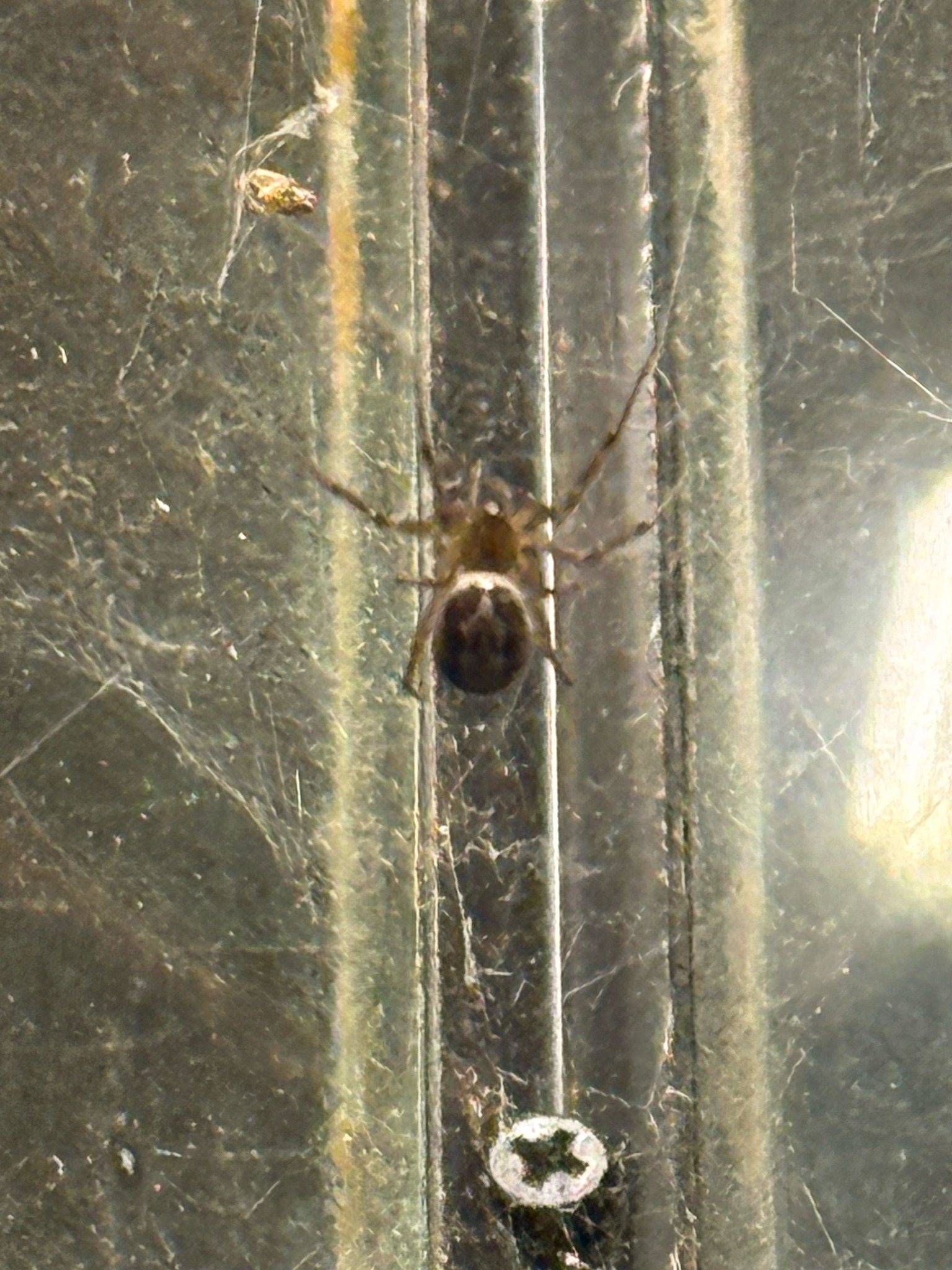
False widow spider (likely noble false widow)
Steatoda nobilis
- Order & Family
- Araneae; Theridiidae (cobweb spiders)
- Size
- Adult females typically 9–14 mm in body length; males are about 7–11 mm, with a larger leg span.
Natural Habitat
Webs in sheltered, dry places such as window frames, sheds, wall crevices, fences, and eaves; common around buildings in parts of Europe and the Pacific Northwest.
Diet & Feeding
Predatory; captures flies, mosquitoes, ants, and other small arthropods in a sticky, irregular cobweb, then immobilizes them with venom and silk.
Behavior Patterns
Mostly nocturnal and sedentary, retreating into a silken lair by day. Females produce several pale egg sacs and may live for multiple years; the pictured web also contains prey remains or an egg sac.
Risks & Benefits
Its bite is uncommon and usually causes localized pain, redness, or swelling, though medical advice is appropriate for severe or persistent symptoms. It is beneficial as a household pest predator and is not considered highly dangerous.