
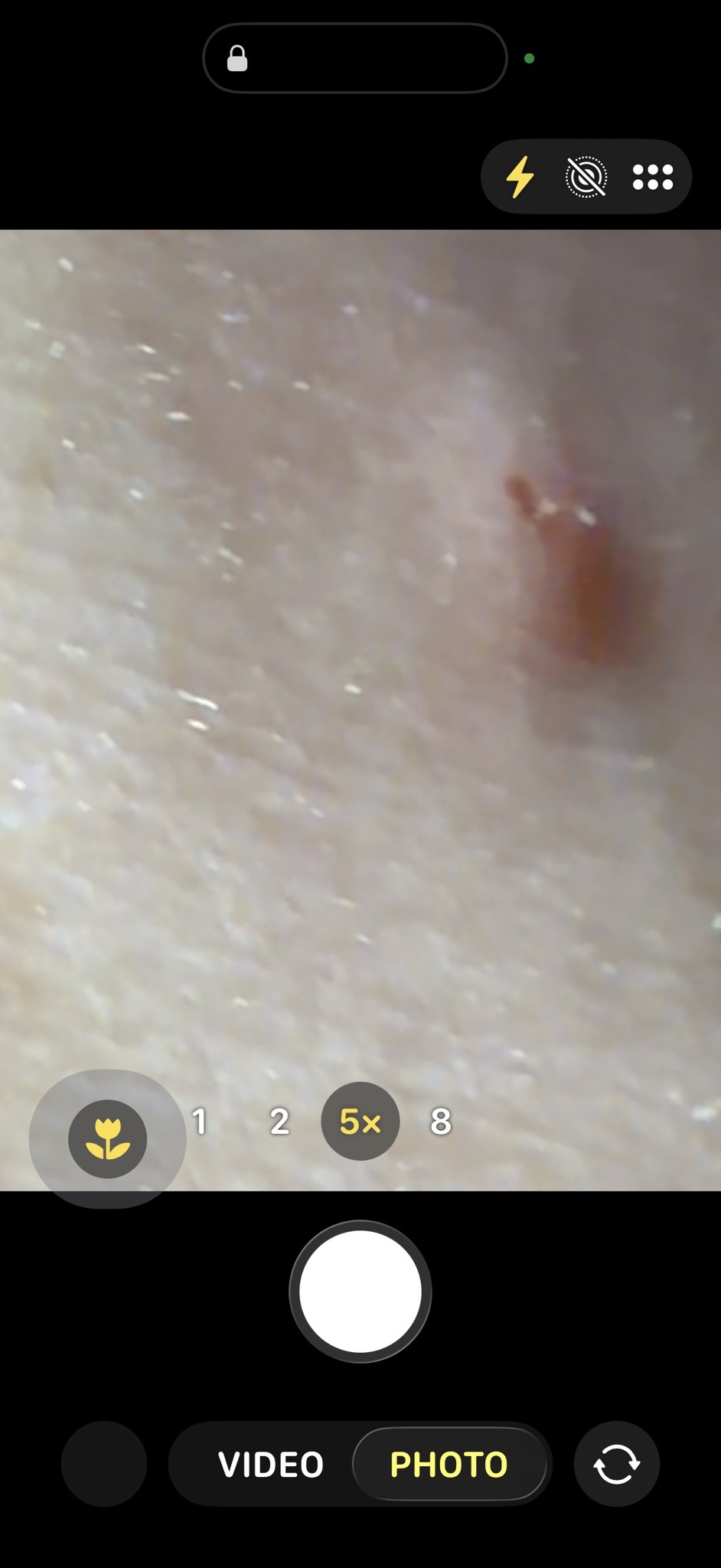
Likely human flea
Pulex irritans (tentative; image is insufficient for certainty)
- Order & Family
- Siphonaptera, Pulicidae
- Size
- Adults are typically 1.5–3.3 mm long; the blurred object appears consistent with a small arthropod but cannot be measured reliably.
Natural Habitat
Lives on or near mammal hosts, including humans, and in carpets, bedding, upholstery, and floor crevices. Common in homes with pets or wildlife access.
Diet & Feeding
Adults feed on blood, piercing skin with specialized mouthparts. Larvae consume organic debris, especially dried blood in adult flea feces.
Behavior Patterns
Wingless, laterally flattened, and highly capable of jumping; adults seek hosts in response to warmth, movement, and carbon dioxide. Eggs and larvae develop off-host, while adults may remain concealed until disturbed.
Risks & Benefits
Bites cause itchy papules and, in sensitive people, allergic dermatitis; fleas can transmit pathogens and parasites, though risk varies geographically. They have no meaningful household benefit and are best controlled through coordinated treatment of pets and indoor environments.