
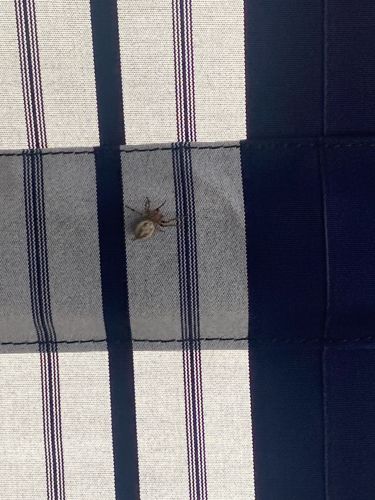
Orb Weaver Spider (likely a furrow orb weaver)
Likely Larinioides cornutus (Furrow Orb Weaver) or a similar species within Araneidae.
- Order & Family
- Order: Araneae, Family: Araneidae
- Size
- Body length typically ranges from 5-15 mm for females and 3-8 mm for males.
Natural Habitat
Gardens, fields, forests, and around human dwellings. They tend to build their webs in open areas between structures or vegetation.
Diet & Feeding
Insects and other small invertebrates caught in their webs.
Behavior Patterns
Orb weavers are known for spinning large, intricate, circular webs to catch prey. The webs are typically rebuilt daily, often at dawn or dusk. They are generally nocturnal.
Risks & Benefits
Risks: Generally harmless to humans. While they possess venom, their bite is typically mild, causing localized pain, redness, and swelling, similar to a bee sting. They are not considered dangerous unless a person has an allergic reaction. Benefits: They are beneficial predators, helping to control populations of various insect pests.