
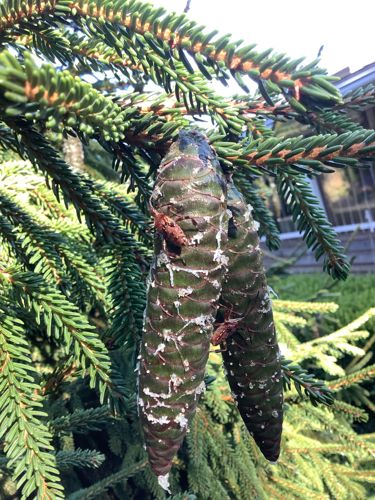
Spruce spider mite
Oligonychus ununguis
- Order & Family
- Trombidiformes, Tetranychidae
- Size
- Approximately 0.3-0.5 mm (0.01-0.02 inches) in length, resembling tiny moving specks to the naked eye.
Natural Habitat
Primarily found on conifers, including spruce, fir, pine, arborvitae, and juniper. They are common in landscapes, nurseries, and natural forests.
Diet & Feeding
Spruce spider mites feed on the sap of conifer needles using their piercing-sucking mouthparts. They prefer older needles but will feed on new growth during heavy infestations.
Behavior Patterns
Spruce spider mites typically overwinter as eggs on the underside of conifer needles and bark. They become active in spring, feeding and reproducing rapidly, especially in dry, warm conditions. Multiple generations can occur within a year. They produce fine silk webbing, visible in heavy infestations.
Risks & Benefits
Risks: These mites are significant pests of conifers, causing yellowing, bronzing, and eventual needle drop, leading to tree defoliation and even death in severe, prolonged infestations. They can significantly impact the aesthetic and economic value of ornamental trees. Benefits: They are a food source for various predatory mites and insects, playing a role in the food web.