
Community identification
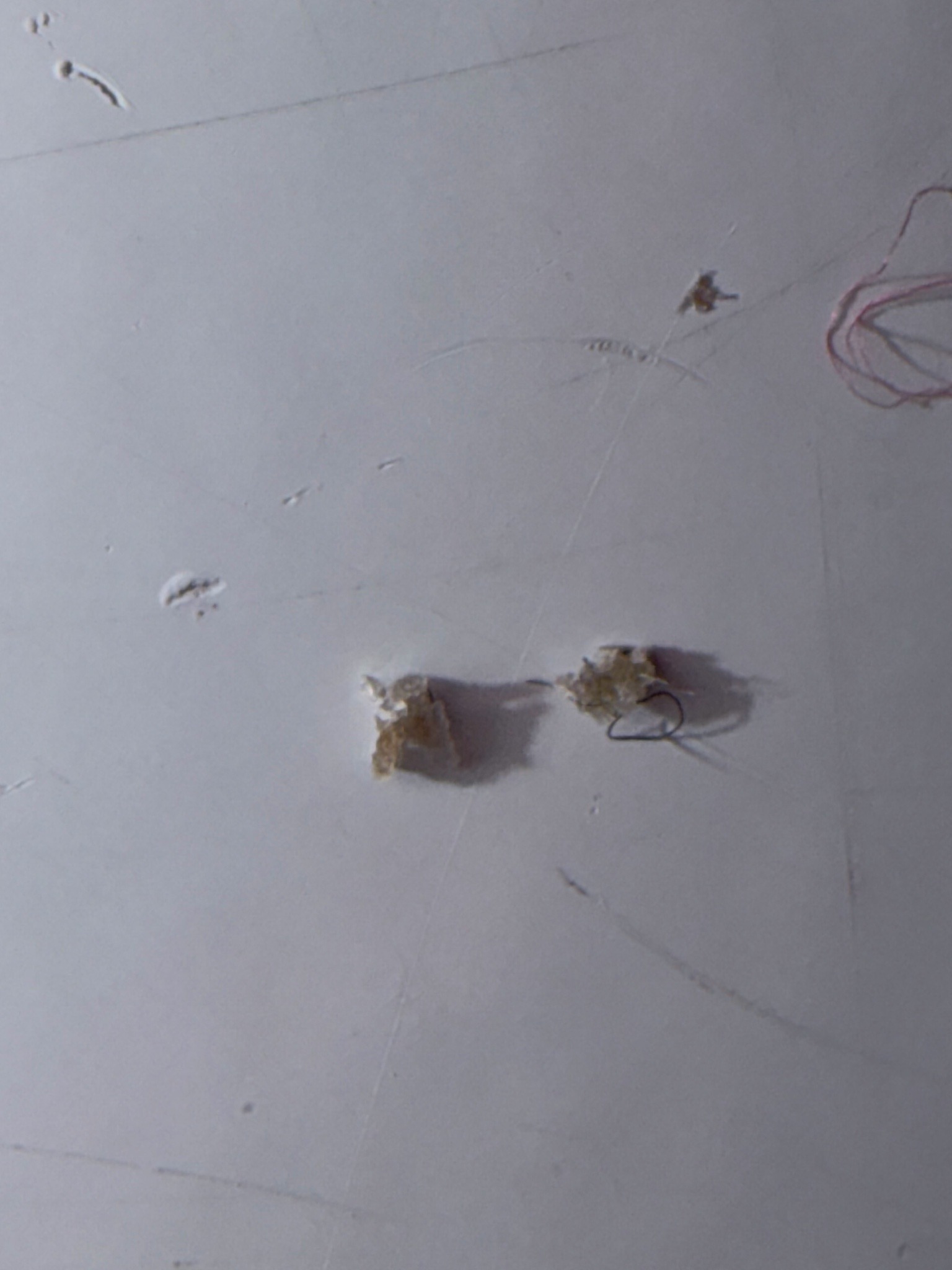
Unidentified small moth or moth-like insect (damaged specimen)
Not reliably identifiable from this image
- Order & Family
- Likely Lepidoptera; family cannot be determined
- Size
- The visible fragments suggest an adult roughly 5–12 mm long, but scale and damage make measurement uncertain.
Natural Habitat
Small moths commonly occur indoors near lights, textiles, stored foods, or houseplants, depending on species.
Diet & Feeding
Adults generally consume nectar or do not feed; larvae may eat fabrics, stored grains, plant material, or detritus depending on species.
Behavior Patterns
Usually nocturnal and attracted to light. Larvae develop concealed in food, fabrics, or organic debris, while adults live for days to weeks.
Risks & Benefits
Most are harmless and contribute to food webs; some species can damage clothing or stored food. The photograph is insufficient for a species-level identification.