
Community identification
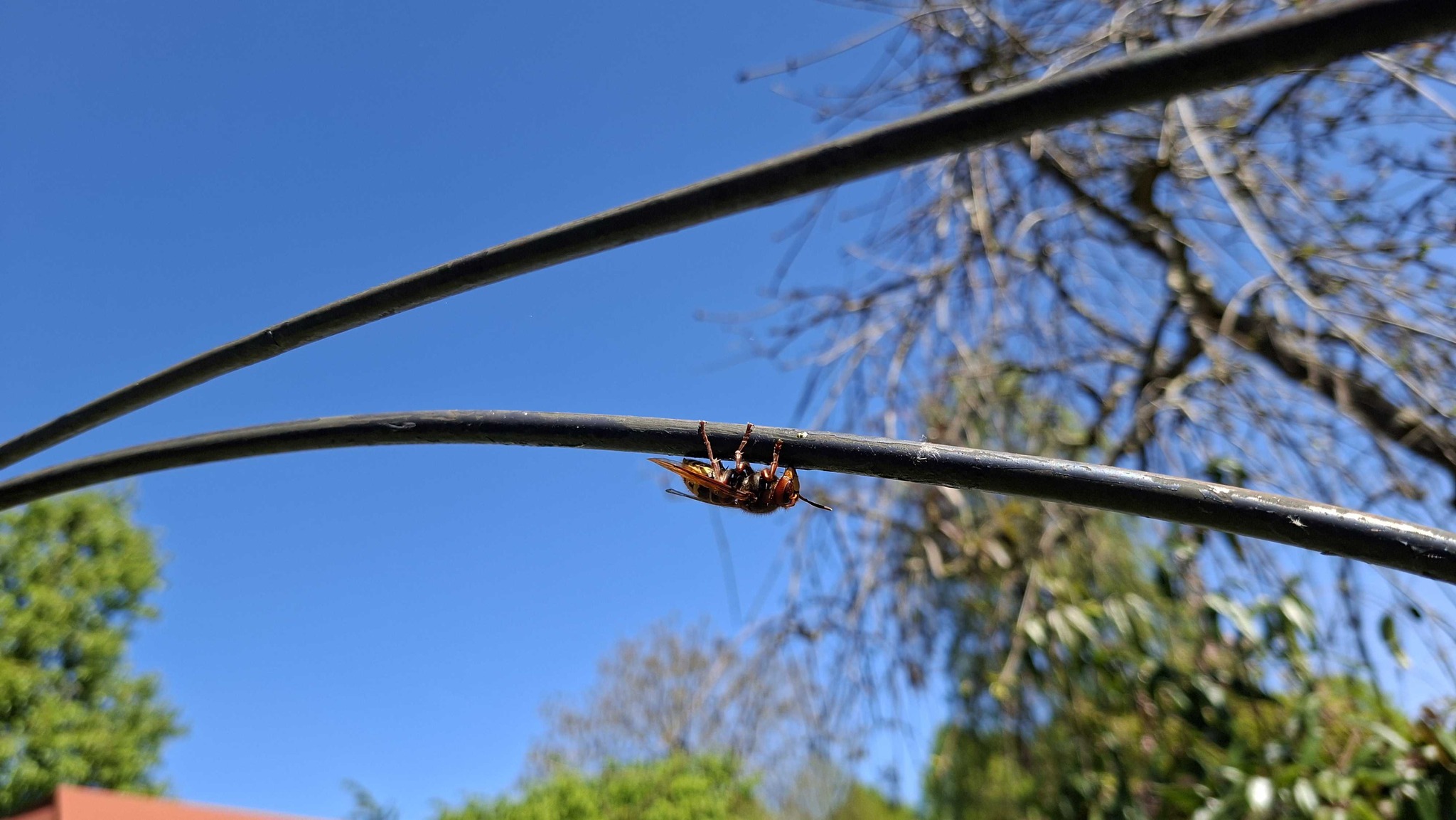
European Hornet
Vespa crabro
- Order & Family
- Hymenoptera: Vespidae
- Size
- 25–35 mm (approx. 1 to 1.4 inches) for queens; workers are smaller.
Natural Habitat
Woodlands, gardens, and near human structures where they build nests in hollow trees, wall voids, or attics.
Diet & Feeding
Large insects such as flies, bees, and other wasps; they also feed on tree sap, fallen fruit, and nectar.
Behavior Patterns
Unlike many wasps, they are active at night and are attracted to porch lights. They are social insects that build large paper nests and follow a seasonal life cycle led by a queen.
Risks & Benefits
They possess a painful sting and can be defensive if the nest is threatened, but they are generally less aggressive than yellowjackets. They benefit the ecosystem by preying on many agricultural pests.