
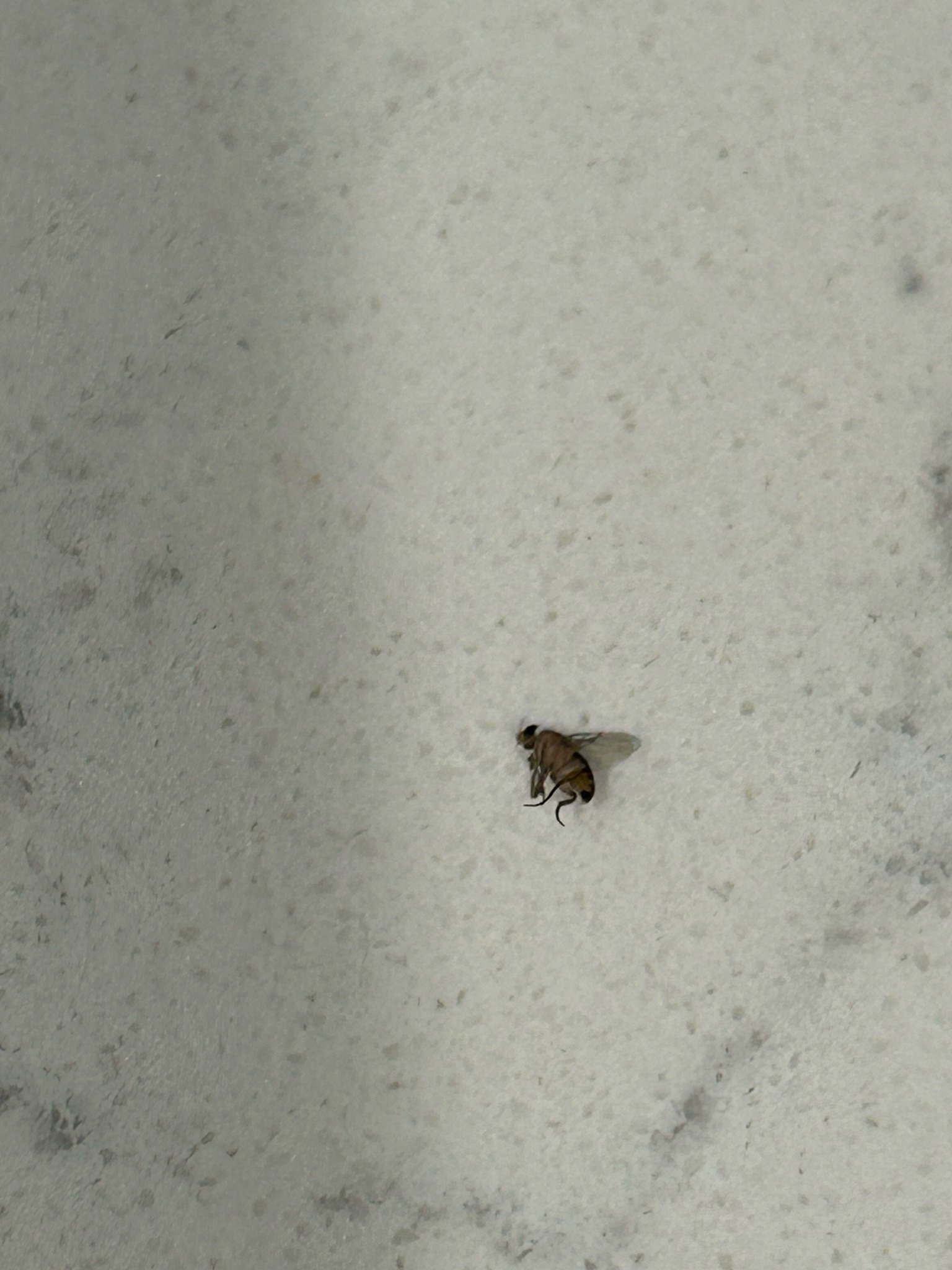
Community identification
Phorid Fly
Phoridae family
- Order & Family
- Order Diptera, Family Phoridae
- Size
- 0.5 to 5.5 mm (1/64 to 1/4 inch) in length.
Natural Habitat
Typically found in moist environment, decaying organic matter, and sewage systems. Common in homes around kitchen drains, bathrooms, and trash bins.
Diet & Feeding
Adults feed on plant nectar and liquid organic matter. Larvae consume decaying plant and animal matter, fungi, and sometimes animal feces.
Behavior Patterns
Characterized by a 'humpbacked' appearance and a tendency to run rapidly across surfaces instead of flying immediately when disturbed. Life cycle is fast, moving from egg to adult in roughly 14-25 days.
Risks & Benefits
Generally considered a nuisance pest and a sanitation risk, as they can mechanically transport pathogens from waste to food surfaces. They do not bite or sting but are difficult to eradicate without removing their breeding source.