
Community identification
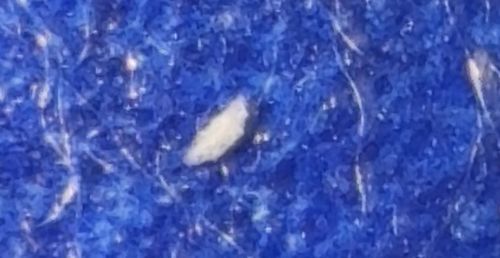
Clothing moth larva (Case-bearing clothes moth)
Tinea pellionella
- Order & Family
- Lepidoptera: Tineidae
- Size
- Larvae grow up to 10 mm in length; the silken case is usually slightly longer.
Natural Habitat
Indoor environments, particularly dark and undisturbed areas like closets, drawers, and under furniture.
Diet & Feeding
Natural fibers containing keratin, such as wool, fur, silk, feathers, and felt; occasionally feeds on stored tobacco or spices.
Behavior Patterns
The larva builds a portable silken case (often camouflaged with fiber fragments) which it lives inside and pulls along as it feeds. They prefer darkness and will quickly crawl away if exposed to light.
Risks & Benefits
Significant pest of household textiles and museum collections; can cause irreparable damage to expensive garments and rugs. They pose no direct health risk to humans but can cause allergic reactions in sensitive individuals.