
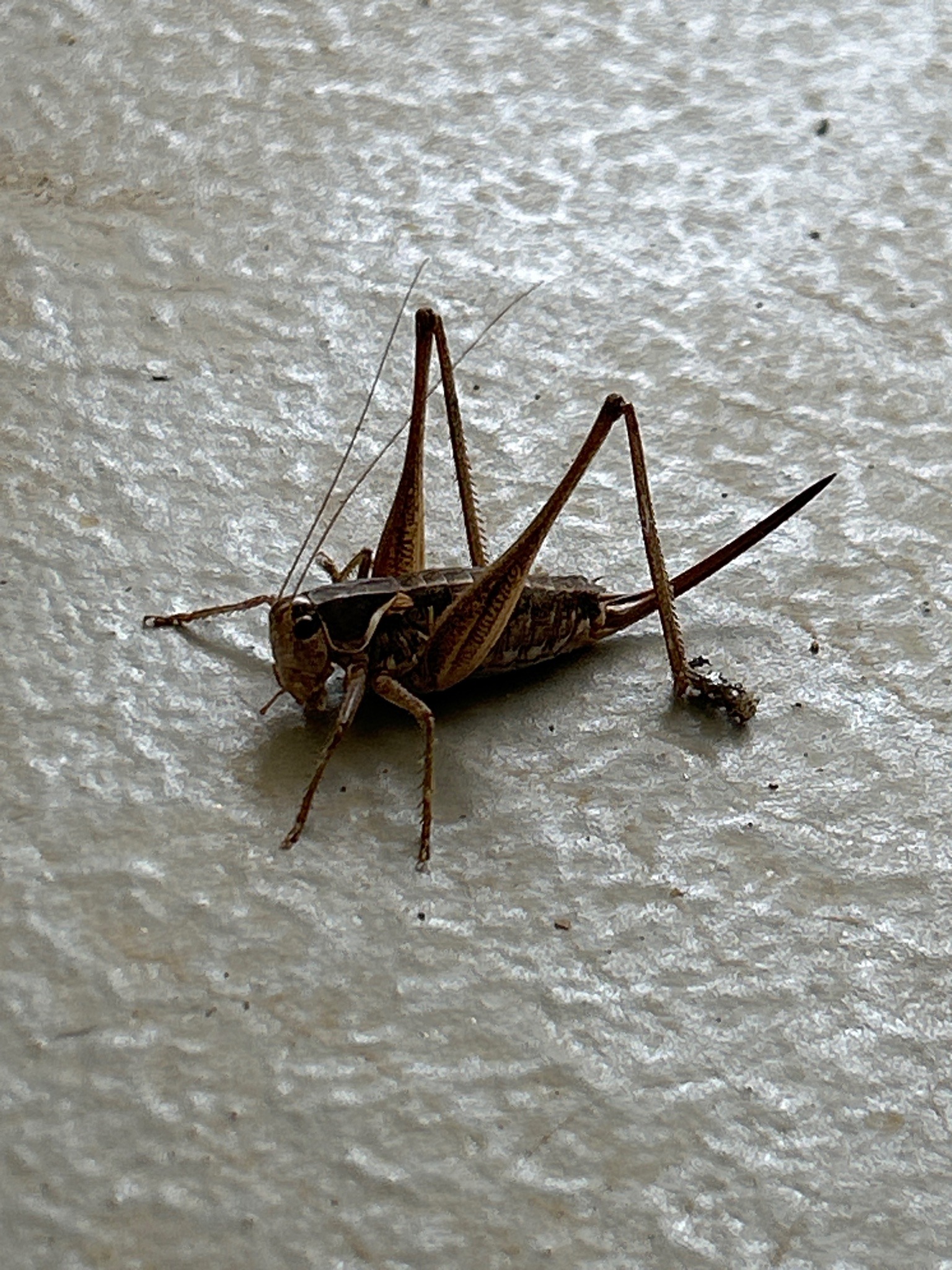
Community identification
Conehead katydid (likely short-winged conehead)
Neoconocephalus sp.
- Order & Family
- Orthoptera; Tettigoniidae
- Size
- Typically 30–55 mm (1.2–2.2 in) including wings and legs, depending on species and sex.
Natural Habitat
Tall grasses, meadows, wetlands, and vegetation along roadsides or field edges; adults may enter buildings attracted to light.
Diet & Feeding
Primarily grasses, sedges, and other vegetation; some individuals also eat insects or other small invertebrates opportunistically.
Behavior Patterns
Nocturnal and strongly associated with loud calling; males produce species-specific songs by rubbing their wings together. They jump or fly when disturbed and develop through incomplete metamorphosis.
Risks & Benefits
Harmless to people and not venomous; occasional feeding can damage grasses or crops. It serves as prey for birds, spiders, frogs, and other predators.