
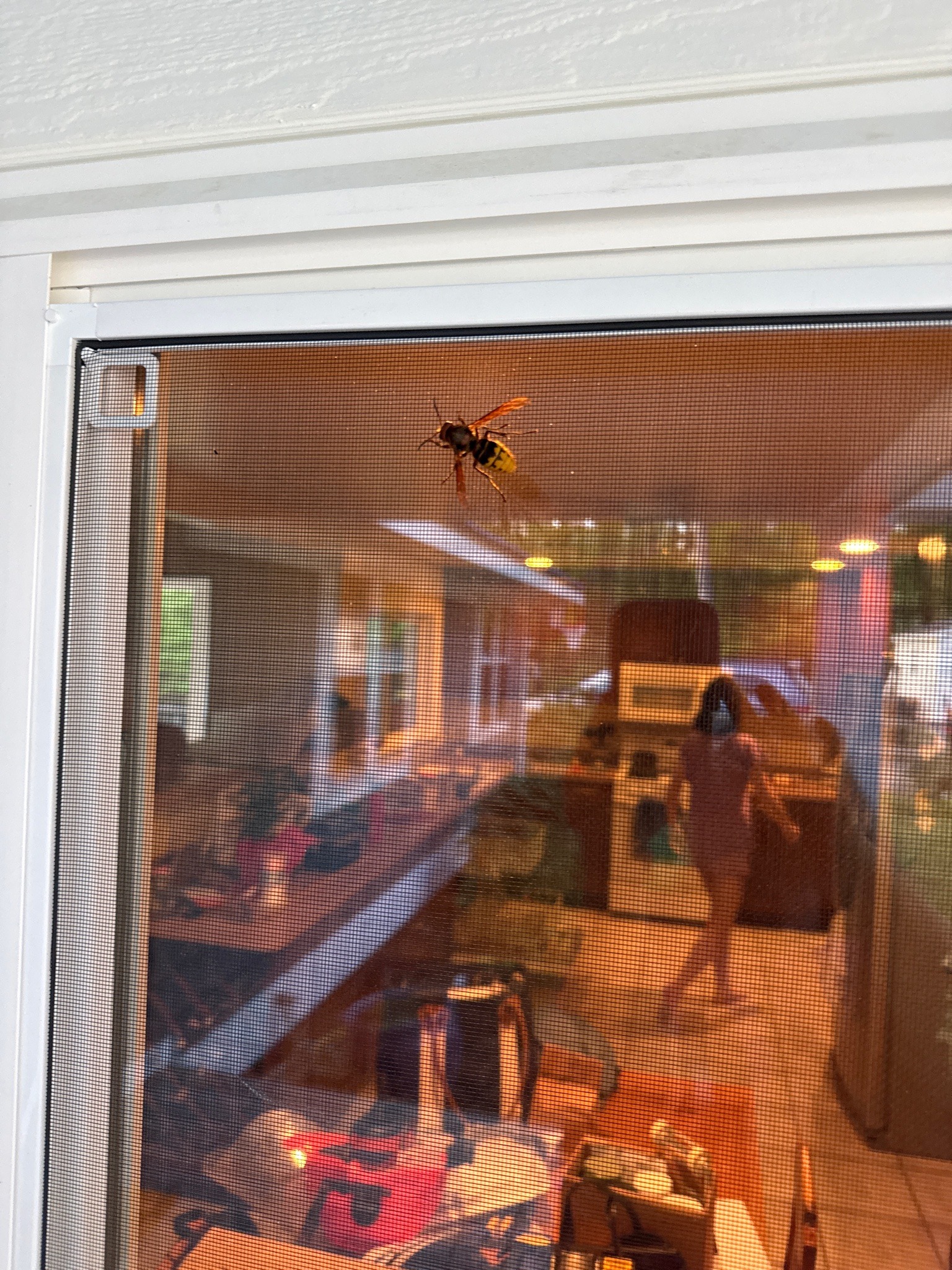
Community identification
European Hornet
Vespa crabro
- Order & Family
- Hymenoptera: Vespidae
- Size
- 25 to 35 mm (1.0 to 1.4 inches) in length.
Natural Habitat
Woodlands, gardens, and shrublands; commonly nests in hollow trees, wall voids, and attics.
Diet & Feeding
Adults feed on sugary substances like fruit and tree sap; larvae are fed protein from hunted insects like flies, bees, and moths.
Behavior Patterns
Eusocial insects with a queen and workers. Unlike most wasps, they are active both day and night and are often attracted to artificial lights at night.
Risks & Benefits
Benefits include biological pest control of other insects. Risks include painful stings if the nest is threatened; while generally less aggressive than yellowjackets, their size makes stings significant for those with allergies.