
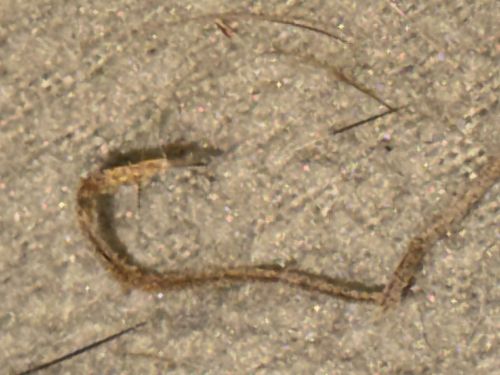
Community identification
Crane Fly Larva
Tipula spp.
- Order & Family
- Order Diptera, Family Tipulidae
- Size
- 10 to 50 mm (0.4 to 2 inches) depending on the species and growth stage.
Natural Habitat
Typically found in moist soil, wet leaf litter, or semi-aquatic environments such as stream banks and marshes.
Diet & Feeding
Mostly detritivores, feeding on decaying organic matter, roots of grasses, and fallen leaves. Some species are predatory toward other small invertebrates.
Behavior Patterns
Often referred to as 'leatherjackets' due to their tough skin, these larvae undergo complete metamorphosis. They spend most of their life in the larval stage before emerging as adult crane flies.
Risks & Benefits
Generally beneficial to the ecosystem as decomposers that recycle nutrients. Some species can be minor lawn pests if they feed excessively on grass roots. They are harmless to humans.