
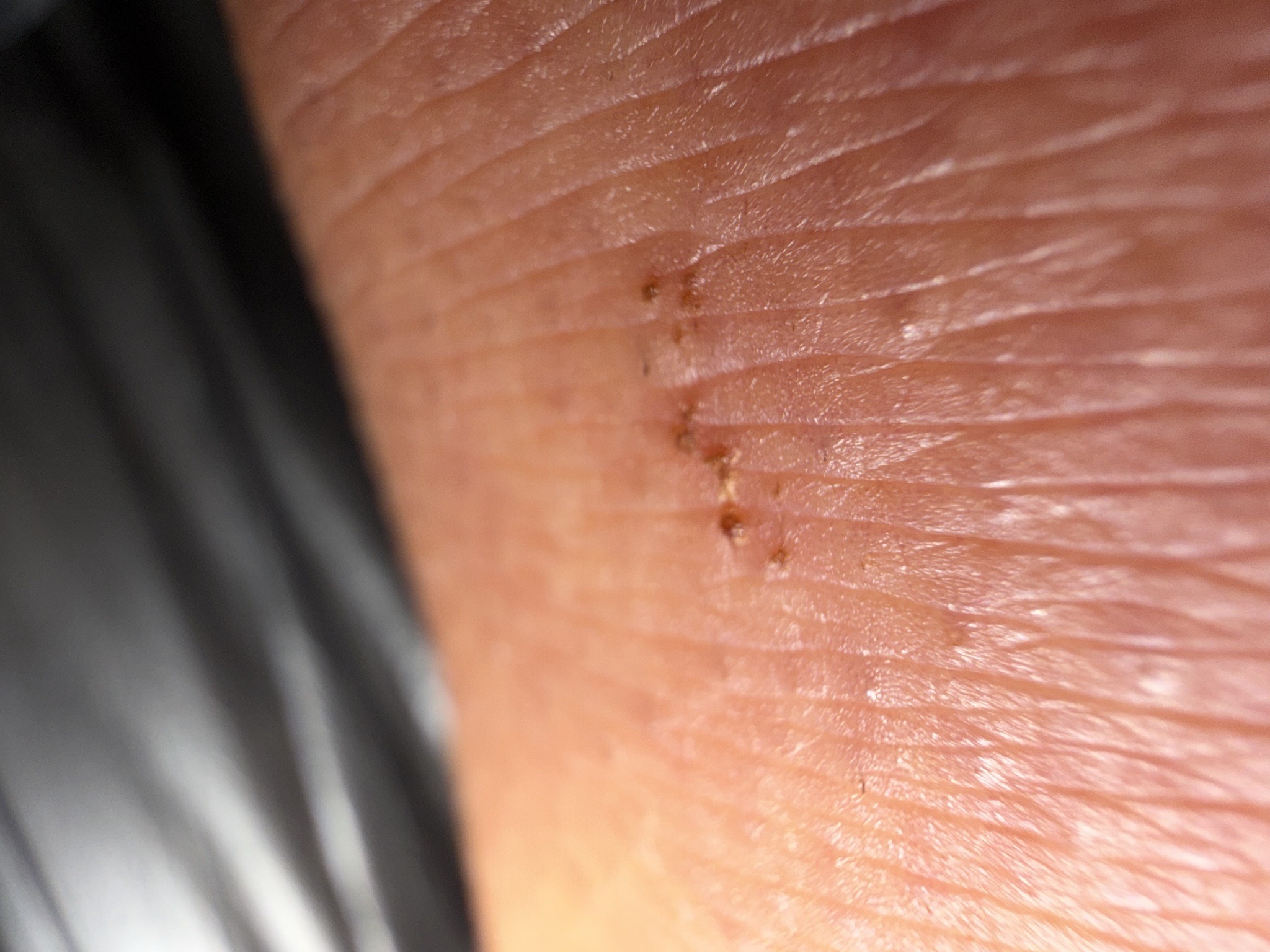
Flea (likely)
Ctenocephalides spp., probably Ctenocephalides felis
- Order & Family
- Siphonaptera; Pulicidae
- Size
- About 1.5–3.3 mm long; the pictured insect is too small and blurred for confident species-level identification.
Natural Habitat
Found on dogs, cats, wildlife, bedding, carpets, upholstery, and floor cracks. Adults remain on hosts; immature stages develop in sheltered household or nest debris.
Diet & Feeding
Adults consume blood from mammals and occasionally birds. Larvae feed mainly on dried blood in adult flea feces and organic debris.
Behavior Patterns
Wingless, laterally flattened insects with powerful jumping legs; adults rapidly move through fur or clothing. Females lay eggs on hosts, which commonly fall into the environment and develop through larval and pupal stages.
Risks & Benefits
Bites cause itchy papules and can trigger flea-allergy dermatitis; fleas may transmit pathogens and serve as intermediate hosts for tapeworms. They provide limited food-web value but are primarily household and veterinary pests.