
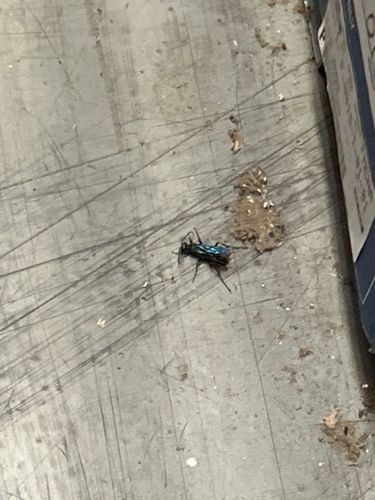
Cuckoo Wasp
Family Chrysididae (various genera and species)
- Order & Family
- Order: Hymenoptera, Family: Chrysididae
- Size
- Most species range from 4 to 15 mm (0.16 to 0.6 inches) in length.
Natural Habitat
Cuckoo wasps can be found in a variety of habitats where their host insects are present, including gardens, meadows, woodlands, and urban areas. They are often seen near old wood, exposed soil, or other areas where ground-nesting bees and wasps might be found.
Diet & Feeding
Adult cuckoo wasps primarily feed on nectar and pollen from flowers. Their larvae are parasitic, feeding on the larvae and/or food provisions of host bees and wasps.
Behavior Patterns
Cuckoo wasps are typically solitary. Females lay their eggs in the nests of other bees and wasps, making them kleptoparasites or parasitoids. The larvae then consume the host's larvae or their provisions. They are often seen foraging on flowers when not searching for host nests. When threatened, many species can roll into a protective ball.
Risks & Benefits
Cuckoo wasps are generally not considered a risk to humans as they rarely sting, and their sting is not very potent. From an ecological perspective, they play a role in regulating populations of their host insects. Their iridescent beauty is also valued by entomologists and naturalists.