
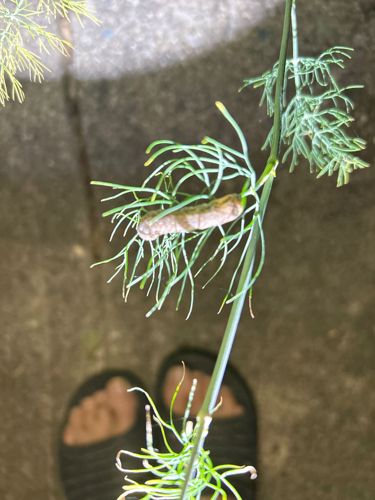
Cutworm (likely a species of Noctuidae)
Various genera within Noctuidae (e.g., Agrotis, Peridroma, Feltia). Without more specific features, identifying the exact species from this image is not possible.
- Order & Family
- Order: Lepidoptera, Family: Noctuidae (Owlet Moths or Armyworms)
- Size
- Larvae can range from 25 mm to 50 mm (1 to 2 inches) in length when fully grown. Adult moths vary greatly depending on the species, but typically have wingspans from 20 mm to 60 mm (0.8 to 2.4 inches).
Natural Habitat
Agricultural fields, gardens, grasslands, and areas with herbaceous vegetation, particularly where suitable host plants are abundant.
Diet & Feeding
Larvae (cutworms) are polyphagous, feeding on a wide variety of plant seedlings and young plants, often cutting them off at or just below the soil surface. Adult moths feed on nectar from flowers.
Behavior Patterns
Larvae (caterpillars) feed on host plants, primarily at night during some instars, and are often camouflaged. They undergo complete metamorphosis, pupating into a chrysalis (often camouflaged to mimic twigs or leaves) before emerging as adult moths. Adult moths are typically nocturnal and feed on nectar.
Risks & Benefits
Risks: Cutworms are significant agricultural pests, causing considerable damage to crops like corn, tomatoes, beans, and many others, leading to economic losses. Benefits: Adult moths can act as pollinators. Larvae, while pests, are also a food source for various predators and parasites, playing a role in the food chain.