
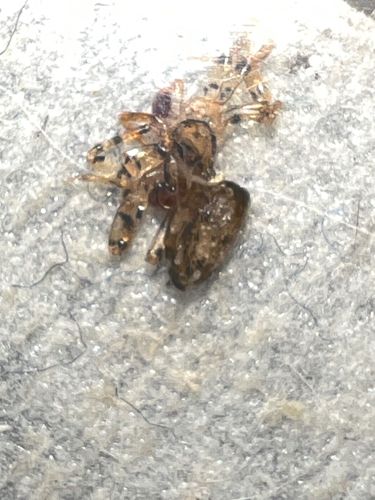
Community identification
Common House Spider
Parasteatoda tepidariorum
- Order & Family
- Order Araneae, Family Theridiidae
- Size
- Females typically 5-6 mm long; males are smaller at 3-4 mm.
Natural Habitat
Often found indoors, particularly in corners of rooms, windowsills, and garages, as well as sheltered areas outdoors like under eaves.
Diet & Feeding
Feeds on a variety of small household pests and other insects, including flies, mosquitoes, and small beetles.
Behavior Patterns
Known for building tangled, messy webs. They are solitary and nocturnal, often spending much of their time waiting in the web for prey to be caught.
Risks & Benefits
Generally beneficial for ecosystem as they help control indoor pest populations. While they are venomous, their venom is not considered medically significant to humans; they are non-aggressive and bite only when threatened.