
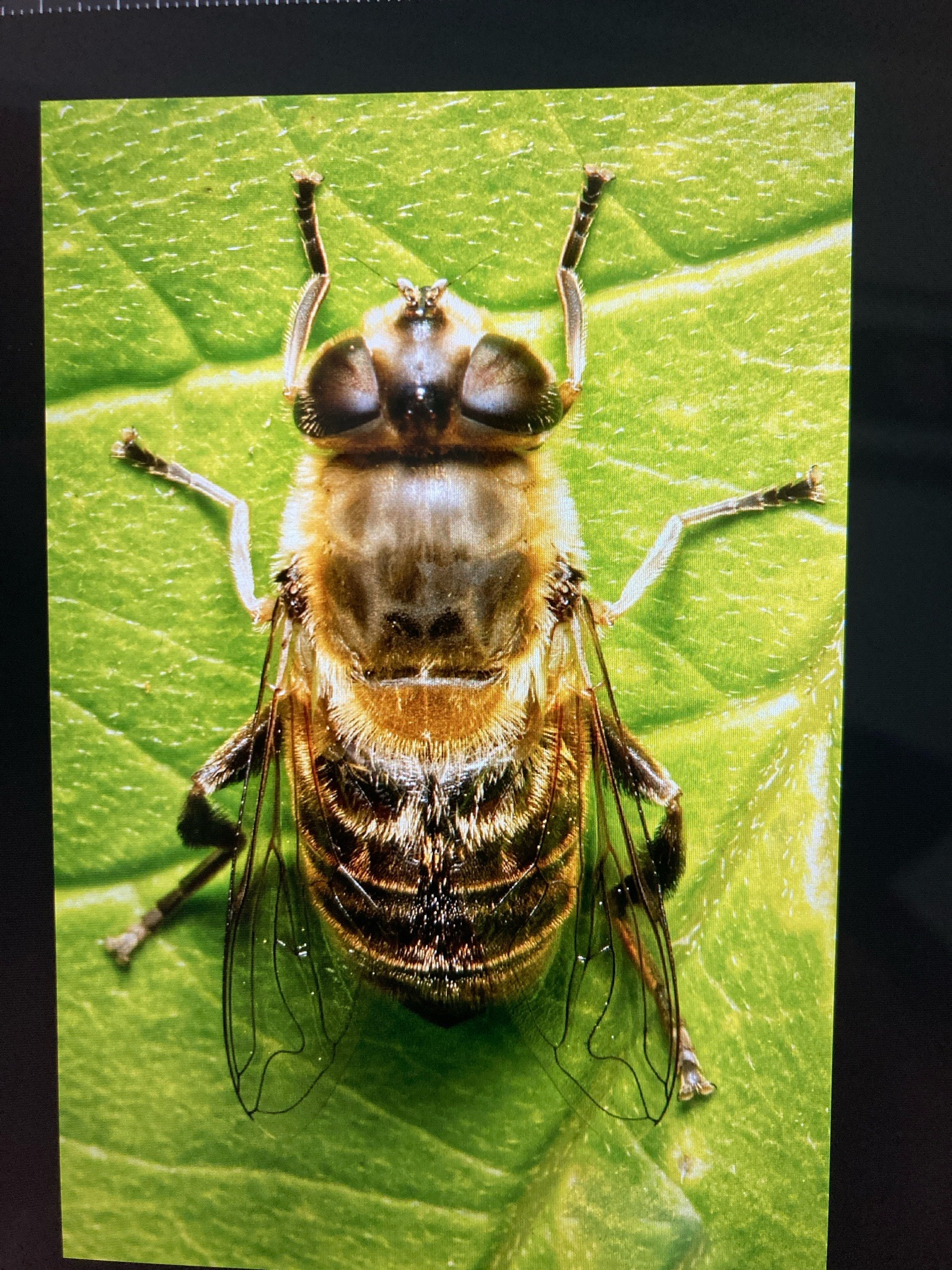
Community identification
Bee fly (hoverfly mimic)
Bombylius major
- Order & Family
- Diptera, Bombyliidae (bee flies)
- Size
- About 8–12 mm long, with a wingspan of roughly 15–25 mm.
Natural Habitat
Sunny flower-rich habitats, woodland edges, meadows, gardens, and forest clearings across much of the Northern Hemisphere.
Diet & Feeding
Adults drink nectar and consume pollen, often hovering at flowers. Larvae are parasitoids or predators of solitary bee and wasp larvae and their provisions.
Behavior Patterns
Adults hover conspicuously and rest on vegetation with wings extended; their dense hair and long proboscis mimic bees. Females scatter eggs near solitary-bee nests, and larvae develop inside those nests.
Risks & Benefits
They do not sting and are harmless to people. Adults are important pollinators, while larvae naturally regulate solitary-bee populations.