
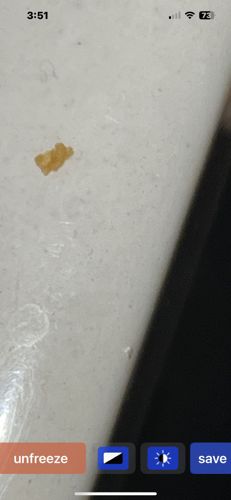
Ant eggs or larvae
Formicidae (eggs/larvae stage)
- Order & Family
- Hymenoptera, Formicidae
- Size
- Typically 0.5 mm to 3 mm in length, depending on the ant species and developmental stage.
Natural Habitat
Ant nests, often found in soil, wood, or under rocks; also found indoors if an ant colony is present nearby.
Diet & Feeding
Ant larvae are fed by adult worker ants, primarily with liquid food (trophallaxis) regurgitated from workers, or solid food particles collected by workers, which can include sugars, proteins, and fats.
Behavior Patterns
Ant eggs are laid by the queen and are very small and often oval-shaped. They hatch into larvae, which are grub-like, legless, and white or yellowish. Larvae are entirely dependent on worker ants for feeding and care. They spend their time growing and molting. The cluster seen in the image suggests a group of these developmental stages being moved or stored by worker ants within or near a nest.
Risks & Benefits
Ant eggs and larvae themselves pose no direct risks to humans. However, their presence indicates an active ant colony. Depending on the ant species, the risks associated with the adult ants can range from nuisance (e.g., pavement ants, odorous house ants) to property damage (e.g., carpenter ants) or painful stings (e.g., fire ants). Benefits include their role in the ecosystem as decomposers, aerating soil, and controlling other insect populations.