
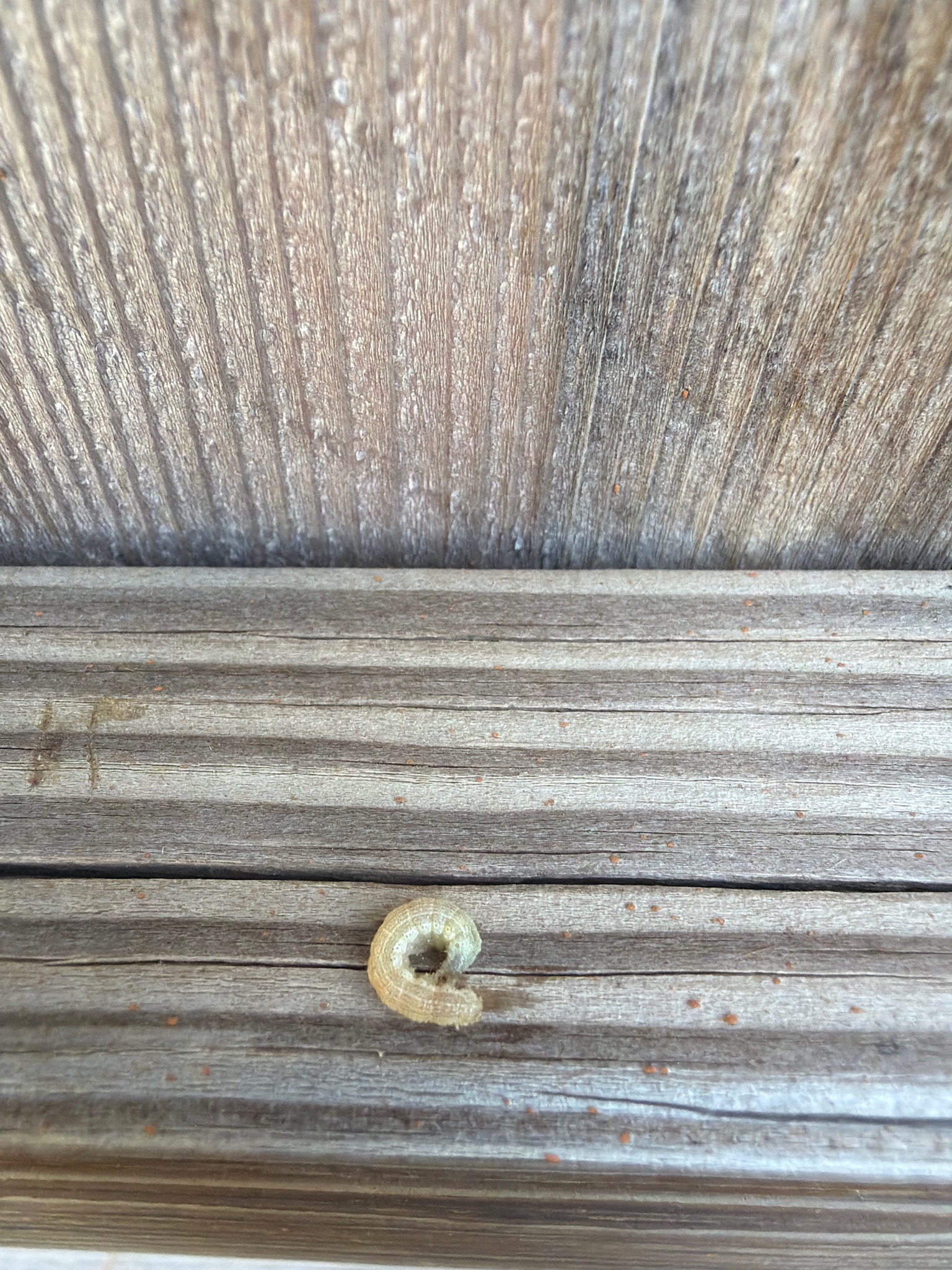
Community identification
Millipede (likely a juvenile or curled small millipede)
Diplopoda; exact species cannot be determined from the image
- Order & Family
- Class Diplopoda; order and family indeterminate
- Size
- Small millipedes range from about 2–30 mm; mature species vary from a few millimeters to several centimeters.
Natural Habitat
Moist soil, leaf litter, decaying wood, mulch, and sheltered areas around buildings. This individual is on weathered wood, likely seeking cover or moisture.
Diet & Feeding
Mostly detritivorous, feeding on decaying leaves, wood, fungi, and other organic matter. They generally do not bite or feed on living animals.
Behavior Patterns
Often curl into a spiral when disturbed, protecting the legs and underside. They are primarily nocturnal and prefer damp conditions; reproduction usually occurs in soil or decomposing vegetation.
Risks & Benefits
Harmless to people, pets, and structures, though some species release irritating defensive chemicals that can stain skin. Millipedes help decompose organic material and recycle nutrients in soil.