
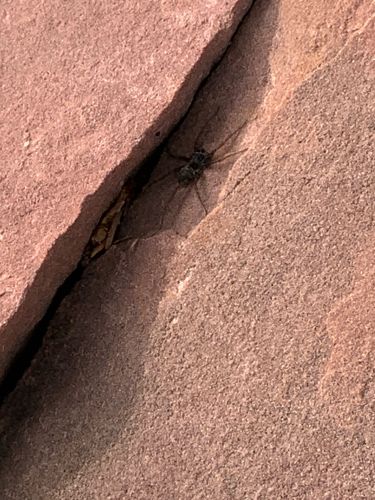
Wolf Spider
Lycosidae family (many genera and species)
- Order & Family
- Order: Araneae, Family: Lycosidae
- Size
- Body length typically ranges from 0.4 to 3.5 cm (0.16 to 1.4 inches), with leg spans considerably larger.
Natural Habitat
Wolf spiders are highly adaptable and can be found in a wide range of habitats, including grasslands, forests, deserts, suburban gardens, and even indoors. They often hide under rocks, logs, leaf litter, or in burrows.
Diet & Feeding
Primarily carnivorous, feeding on a wide variety of insects such as crickets, grasshoppers, flies, beetles, and other small invertebrates. Larger species may occasionally prey on small lizards or frogs.
Behavior Patterns
Wolf spiders are typically solitary hunters. They do not build webs to catch prey but actively pursue and pounce on their victims. They are fast runners and rely on their keen eyesight for hunting. Many species carry their egg sacs attached to their spinnerets and, after hatching, the spiderlings ride on the mother's back for a period.
Risks & Benefits
Risks: Wolf spiders are generally not aggressive. While they possess venom, their bite is typically not medically significant to humans, often resulting in mild localized pain, redness, and swelling, similar to a bee sting. Allergic reactions are rare. Benefits: They are beneficial predators, helping to control populations of various insect pests in agricultural and natural environments.