
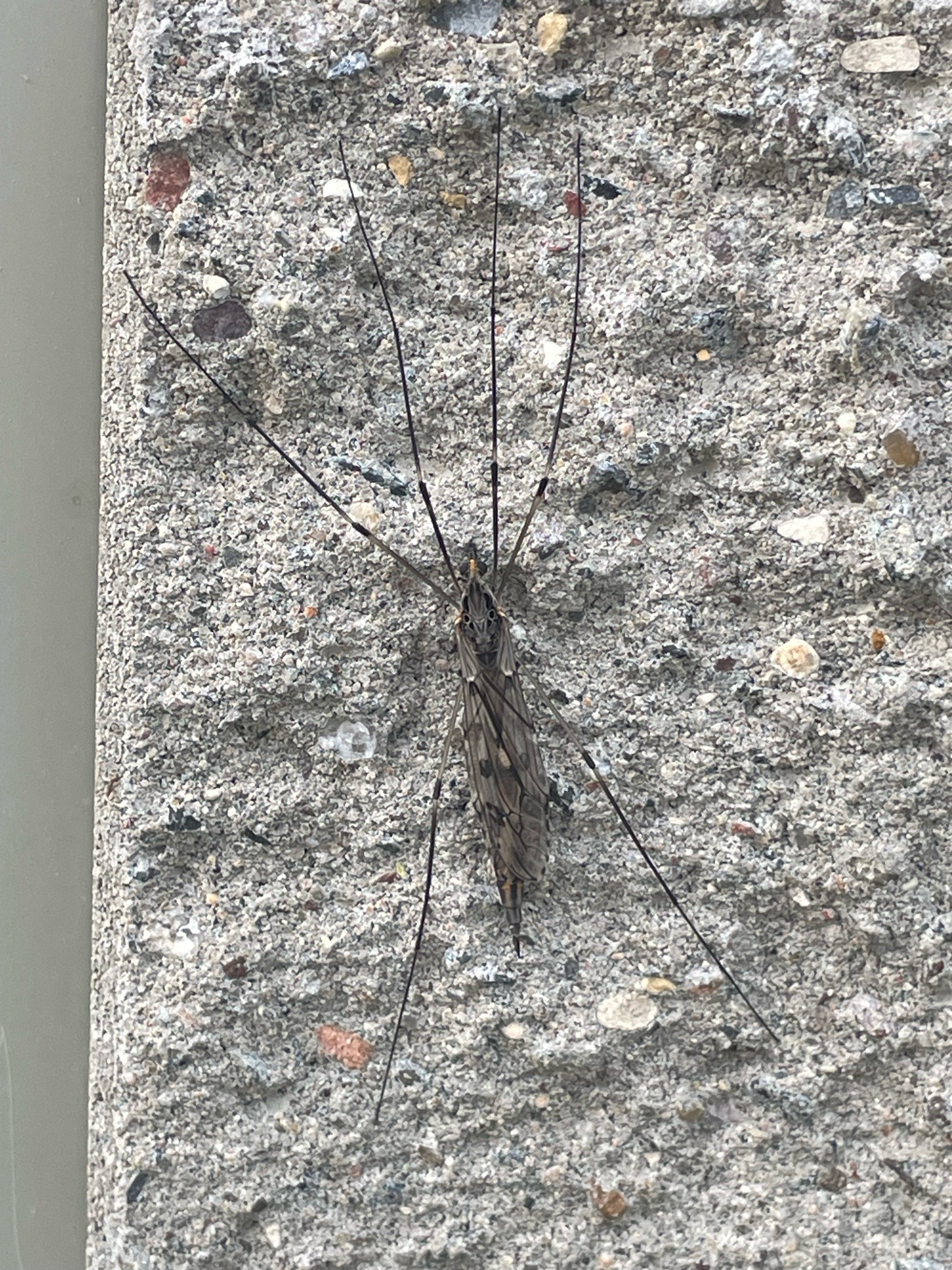
Community identification
Giant crane fly
Holorusia spp. (likely Holorusia rubiginosa)
- Order & Family
- Diptera; Tipulidae
- Size
- Adults typically measure 25–40 mm (1–1.6 in) in body length, with a leg span that can exceed 75 mm (3 in).
Natural Habitat
Moist habitats such as stream margins, damp soil, forests, gardens, and grasslands; adults often rest on walls or vegetation.
Diet & Feeding
Adults usually consume little or nothing, though some take nectar or water. Larvae feed on decaying plant material, roots, and other organic matter in moist soil.
Behavior Patterns
Weak fliers that are commonly active around dusk and attracted to lights; their long legs detach easily when handled. Larvae develop in soil or aquatic margins before pupating.
Risks & Benefits
Harmless to people and do not bite or sting. Larvae help decompose organic matter, although some species can occasionally damage turf or seedlings.