
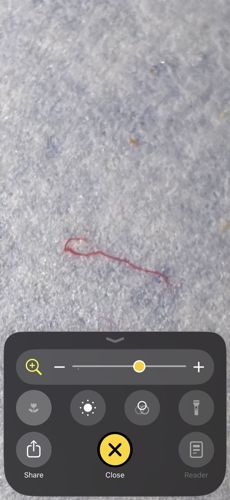
Bloodworm (Chironomid Larva)
Chironomus sp.
- Order & Family
- Order: Diptera, Family: Chironomidae
- Size
- Approximately 10 to 25 millimeters (0.4 to 1 inch) in length.
Natural Habitat
Freshwater sediments, including lakes, rivers, ponds, and slow-moving streams. Some species are found in brackish or even marine environments.
Diet & Feeding
Detritivores; they consume organic debris, algae, and microscopic organisms found in the sediment.
Behavior Patterns
They are the aquatic larval stage of non-biting midges. They produce hemoglobin to absorb oxygen in low-oxygen environments, which gives them their red color. They typically live in silk-lined tubes within the substrate.
Risks & Benefits
Benefits: They are a crucial component of the aquatic food web, serving as a primary food source for fish and waterfowl. They also help decompose organic matter. Risks: Non-biting midges can become nuisances in large swarms, but they do not bite or pose a direct health risk to humans.