
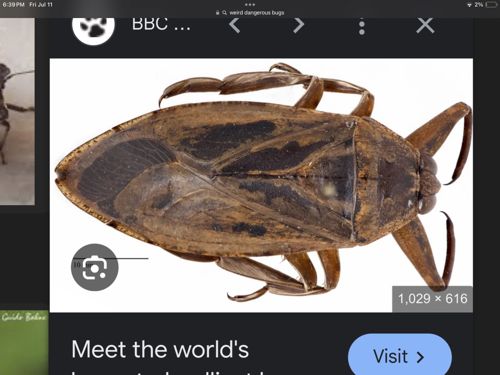
Giant Water Bug, Toe-Biter, Alligator Tick
Belostomatidae (family)
- Order & Family
- Order: Hemiptera, Family: Belostomatidae
- Size
- Species vary in size, ranging from approximately 2 cm (0.8 inches) to over 12 cm (4.7 inches), making them among the largest true bugs.
Natural Habitat
They are predominantly aquatic insects found in freshwater environments such as ponds, lakes, marshes, and slow-moving streams. They prefer areas with abundant aquatic vegetation.
Diet & Feeding
They are carnivorous predators, feeding on other insects, small fish, tadpoles, frogs, small snakes, and even small turtles. They inject digestive saliva into their prey and then suck out the liquefied tissues.
Behavior Patterns
Giant water bugs are ambush predators, often hiding among aquatic vegetation or waiting at the water's surface. They are known for their painful bite if handled. They are also known for parental care, especially in some species where the males carry the eggs on their backs until they hatch.
Risks & Benefits
Risks: Their bite can be extremely painful to humans, often described as one of the most painful insect bites. While not medically dangerous unless the person has an allergy, it can cause localized pain, swelling, and numbness. Benefits: As predators, they play a role in controlling populations of other aquatic organisms, including insect larvae and small fish.